


Product Detail
Anamta Ivory Tulle Bridal Pishwas | Mastorat
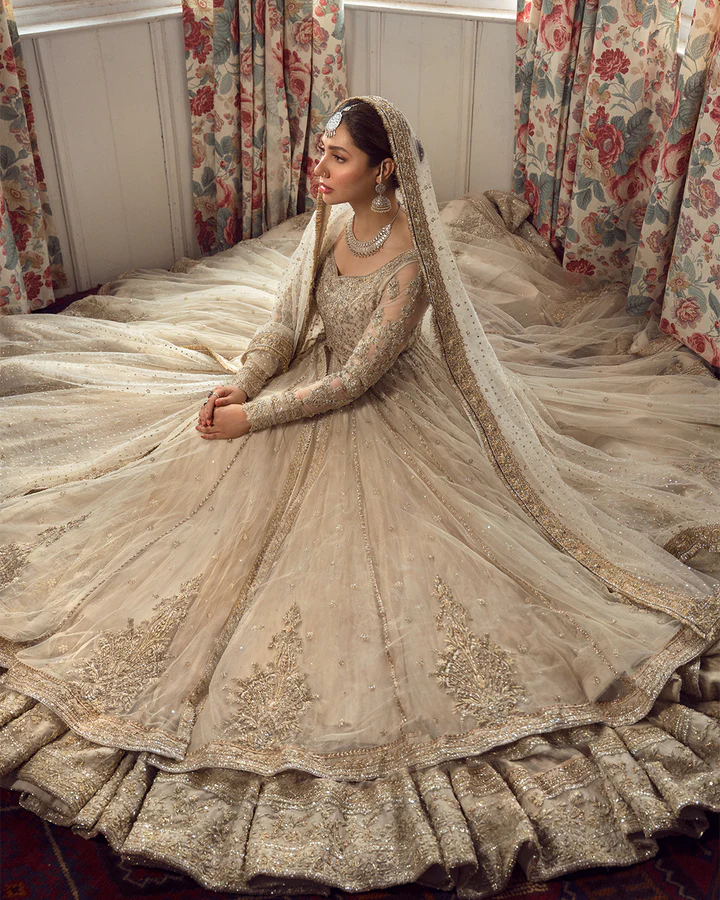
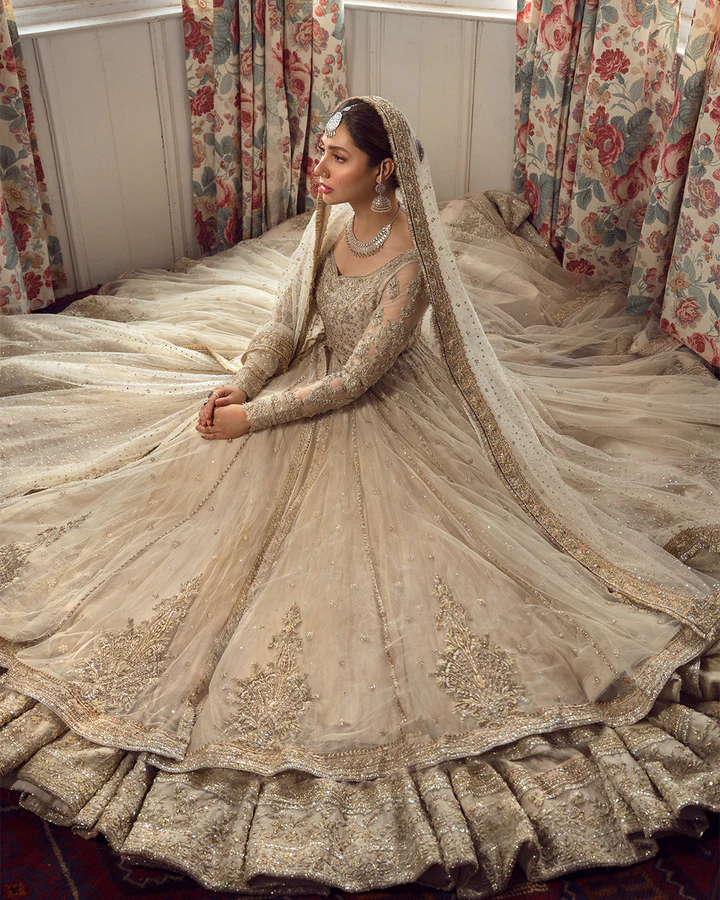
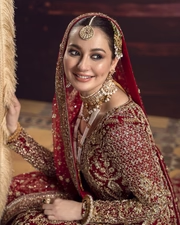
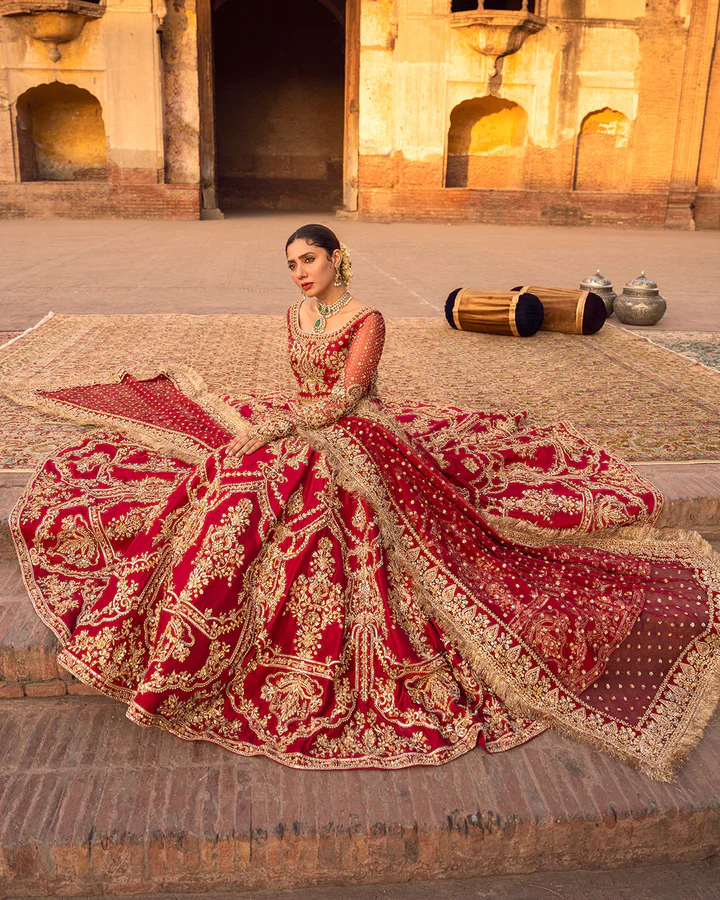
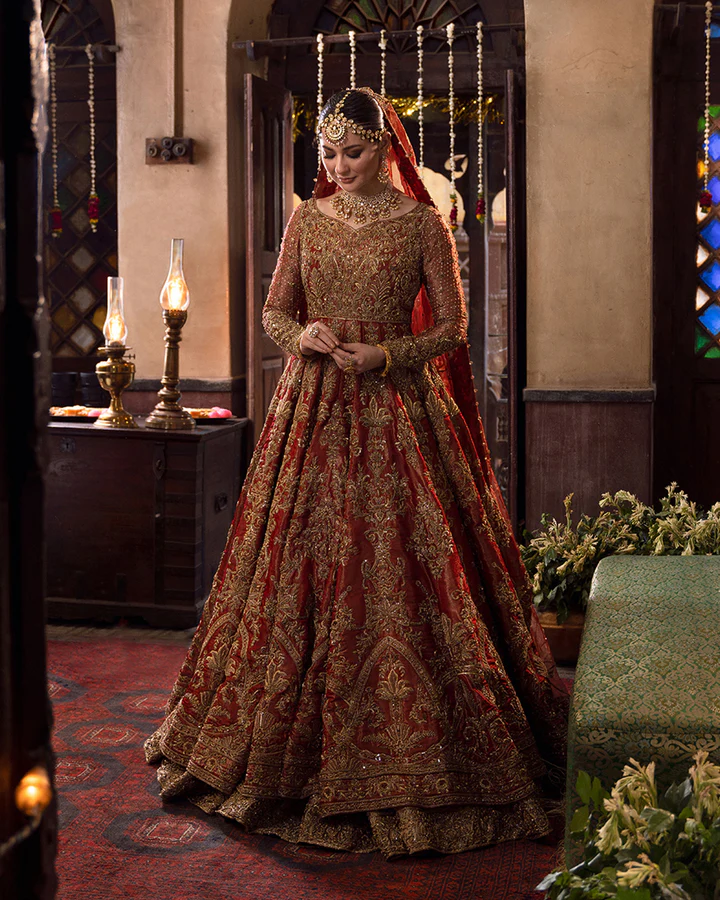
There is something almost ethereal about ivory bridal wear — a colour that feels both pure and luminous, carrying none of the heaviness of deeper bridal tones, yet losing none of the grandeur. Anamta, from Mastorat, captures this quality perfectly. Crafted in ivory tulle and worked with three of the most revered hand embroidery techniques — dabka, zardozi, and hand cut sitara — Anamta is a pishwas that feels less like a garment and more like a piece of wearable art, made for the bride who wants her ensemble to glow from within.
The Silhouette
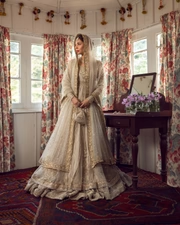
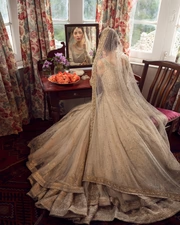
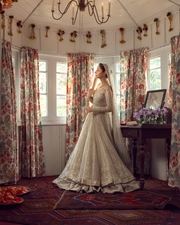
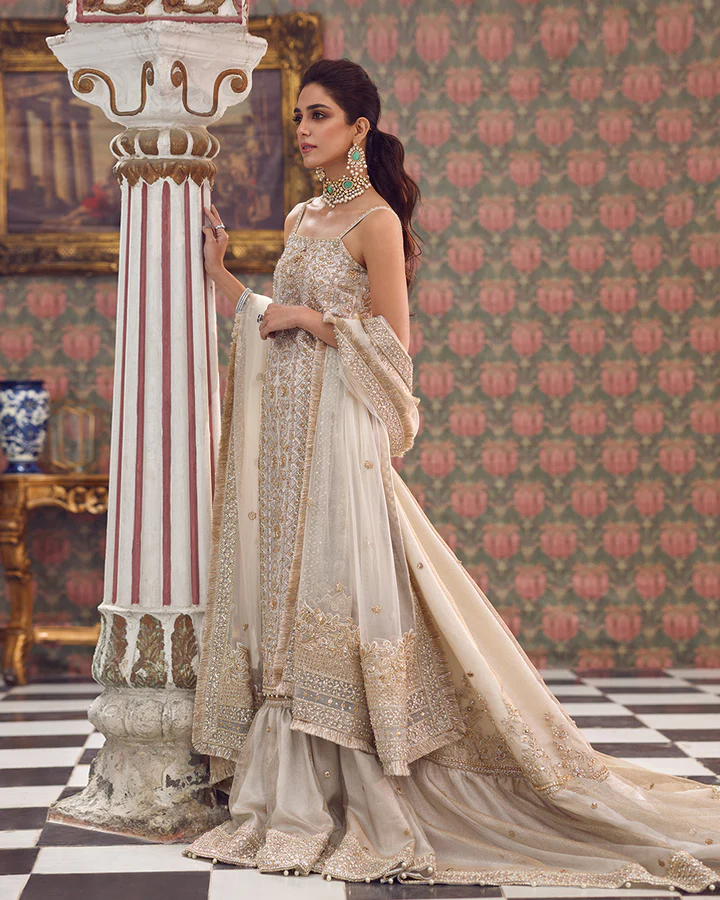
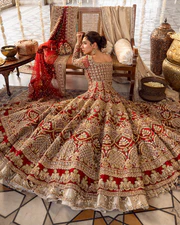
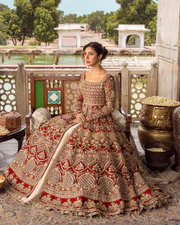
Anamta’s foundation is a double layered net and tissue pishwas, hand embellished across both the front and back panels. The pishwas silhouette, with its flowing, floor-sweeping drape, has remained a beloved choice among brides for generations, prized for the way it moves — gracefully, dramatically, with a sense of occasion built into every fold. The double layering of net over tissue in Anamta adds volume and structure without weighing the garment down, allowing the bride to walk, twirl, and sit with ease through every ceremony of the day.
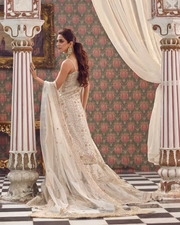
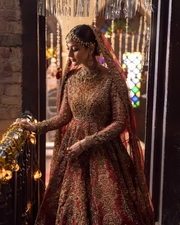
The decision to embellish both the front and back of the pishwas equally is a deliberate one. Bridal wear is documented from every angle — during the rukhsati walk, during photographs, during the quiet moments captured candidly by guests — and Anamta has been designed with this in mind, ensuring the bride looks equally resplendent no matter which way she turns.
The Sleeves
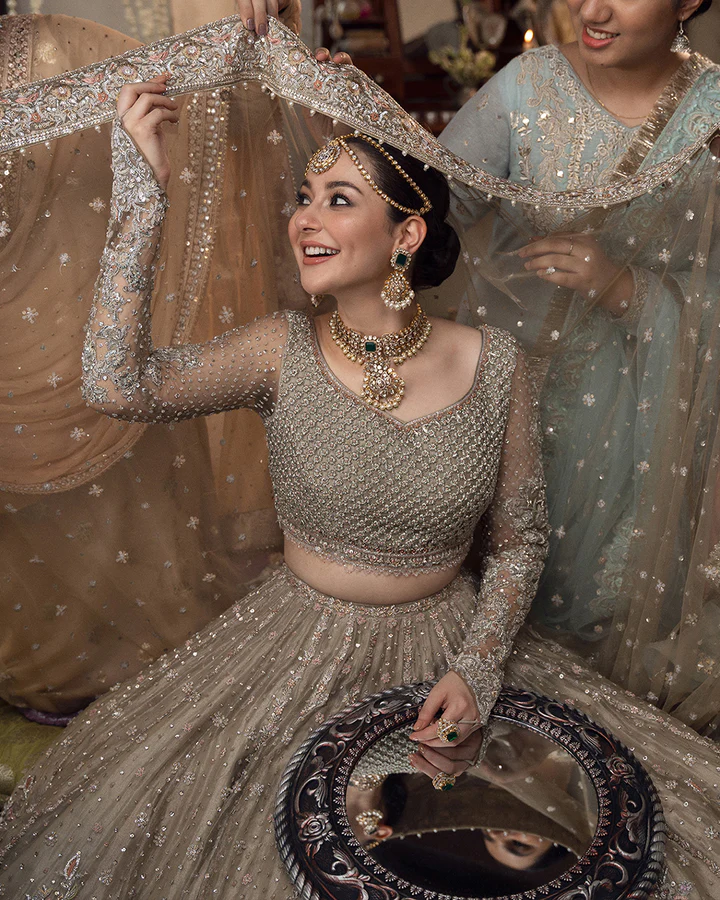
Completing the bodice are hand embellished net sleeves, rendered in the same sheer fabric that allows the intricate handwork to take centre stage against the skin. The sleeves continue the visual language of the pishwas, carrying forward the dabka, zardozi, and sitara work in a way that feels proportionate and considered, rather than an afterthought tacked onto the main bodice. The sheerness of the net also lends the sleeves a romantic, almost weightless quality, balancing the richness of the embellishment with softness.
The Dupatta
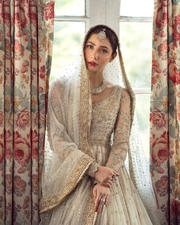
No ivory bridal look is complete without a dupatta that mirrors its quiet grandeur, and Anamta’s hand embellished net dupatta delivers exactly that. Light and flowing, the dupatta has been worked with the same techniques found across the rest of the ensemble, allowing it to be draped over the shoulders for an elegant, modern finish, or arranged over the head for ceremonies where a more traditional veil is preferred. The net base ensures the dupatta remains breathable, even with its detailed handwork, making it comfortable to wear through long bridal events.
The Craftsmanship
What makes Anamta truly exceptional is the trio of hand embroidery techniques used to bring it to life — dabka, zardozi, and hand cut sitara — each one chosen for the distinct texture and shimmer it lends to the final piece.
Dabka involves the meticulous coiling of fine metallic wire into detailed patterns, creating a textured, almost sculptural effect on the fabric. It is among the most demanding forms of hand embroidery, requiring artisans to work with precision and patience to maintain consistency across every motif.
Zardozi, one of the oldest forms of metal embroidery in South Asian textile history, traditionally uses gold and silver thread to create rich, raised designs. Historically reserved for royalty and bridal trousseaus, zardozi lends Anamta a sense of heritage and opulence, with each motif catching light differently depending on the angle from which it’s viewed.
Hand cut sitara is perhaps the most delicate of the three techniques featured on Anamta. Sitaras, small sequins or star-shaped embellishments, are individually cut and hand-placed by artisans to catch and scatter light across the fabric. The hand-cutting process ensures that each sitara has a slightly unique shape and edge, giving the embellishment a handmade authenticity that machine-cut sequins simply cannot replicate.
Together, these three techniques have been layered with care across Anamta’s pishwas, sleeves, and dupatta, creating a piece where every inch rewards close inspection. The interplay between the structured shine of zardozi, the textured dimension of dabka, and the scattered sparkle of hand cut sitara gives Anamta a depth that feels rich without ever tipping into excess.
The Color Story
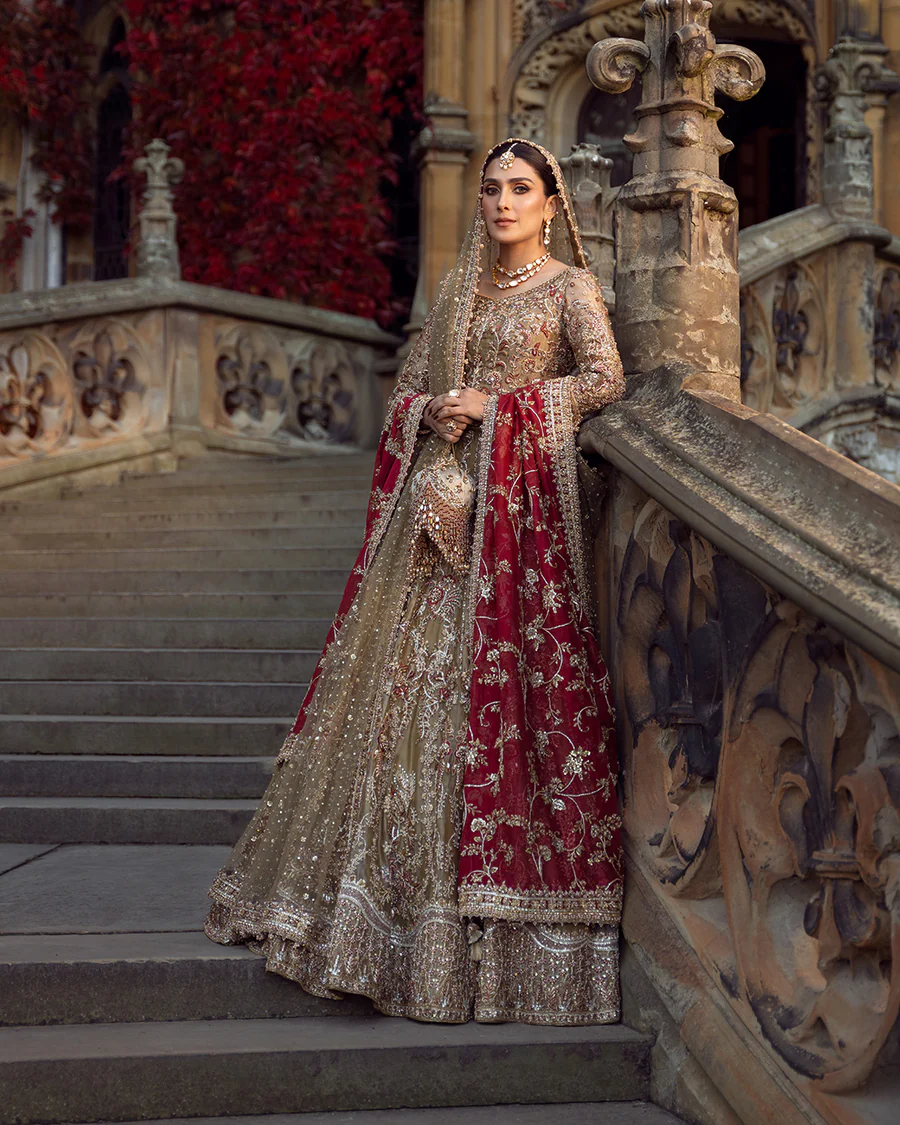
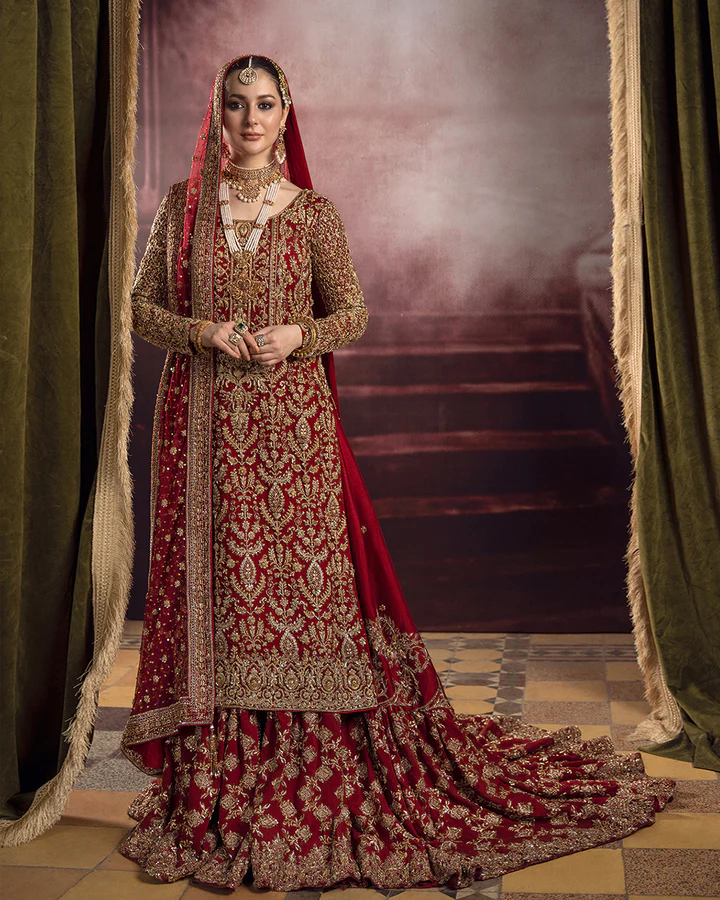
Ivory holds a unique place in bridal fashion — a shade that feels celebratory yet serene, traditional yet versatile. Unlike stark white, ivory carries a warm undertone that flatters most skin tones and pairs beautifully with gold and silver embellishment, allowing the handwork on Anamta to take centre stage rather than competing with a bold base colour. It is a shade that photographs beautifully in every kind of light, from the soft glow of daytime nikah ceremonies to the warmer, golden light of evening events.
As with all handcrafted garments, please note that the actual colors of Anamta may vary slightly from the images shown, due to differences in lighting, photography, and the natural character of handworked fabrics and embellishments.
The Process Behind Anamta
Creating Anamta is an undertaking that spans weeks of dedicated artisan labour. From the careful layering of net and tissue for the pishwas, to the hours spent coiling dabka wire, embroidering zardozi motifs, and hand-cutting and placing each sitara, every stage of production demands skill that has been honed over years of practice. Because of this intensive, multi-technique embellishment process, Anamta requires a shipping time of 3 to 4 months — a timeline that reflects the genuine craftsmanship invested in every piece, as it is made to order rather than mass-produced.
Why Choose Anamta
For the bride who wants her ensemble to feel luminous rather than loud, who appreciates the heritage and skill behind techniques like zardozi and hand cut sitara, and who envisions her bridal look in a soft, radiant ivory rather than a bold traditional hue, Anamta is an exceptional choice. It is a pishwas made for quiet drama — the kind that doesn’t need bold colour to command attention, but instead relies on texture, light, and the unmistakable mark of true handcraftsmanship.
Anamta is, in every sense, a celebration of artisanal heritage — made for the bride who wants her wedding day ensemble to carry not just beauty, but meaning, in every hand-placed sitara and every carefully coiled thread of dabka.
Reviews
There are no reviews yet.