
Product Detail
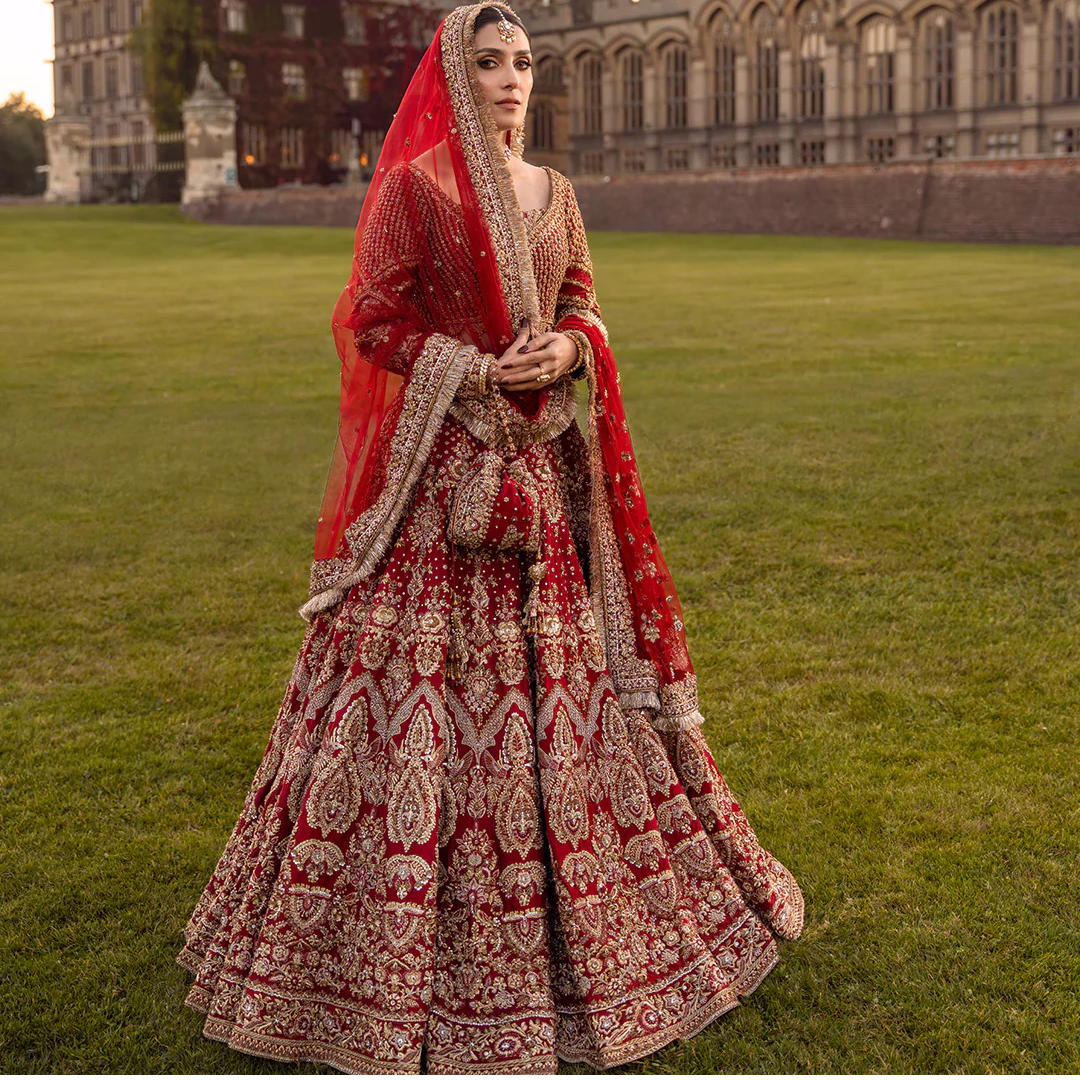
Roushana by Mastorat: Bright Red Bridal Splendor in Motion
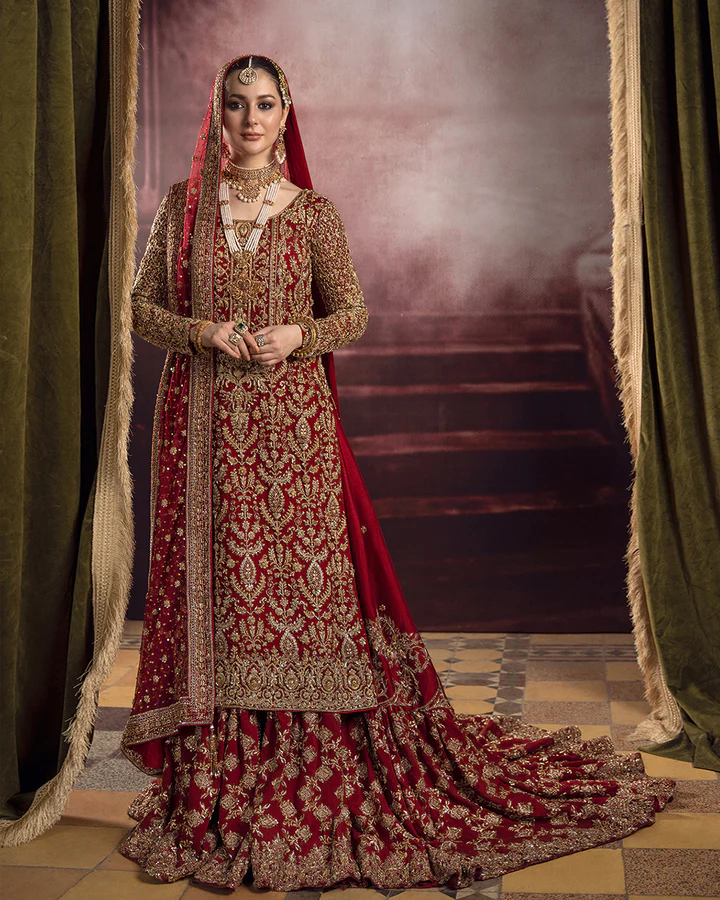
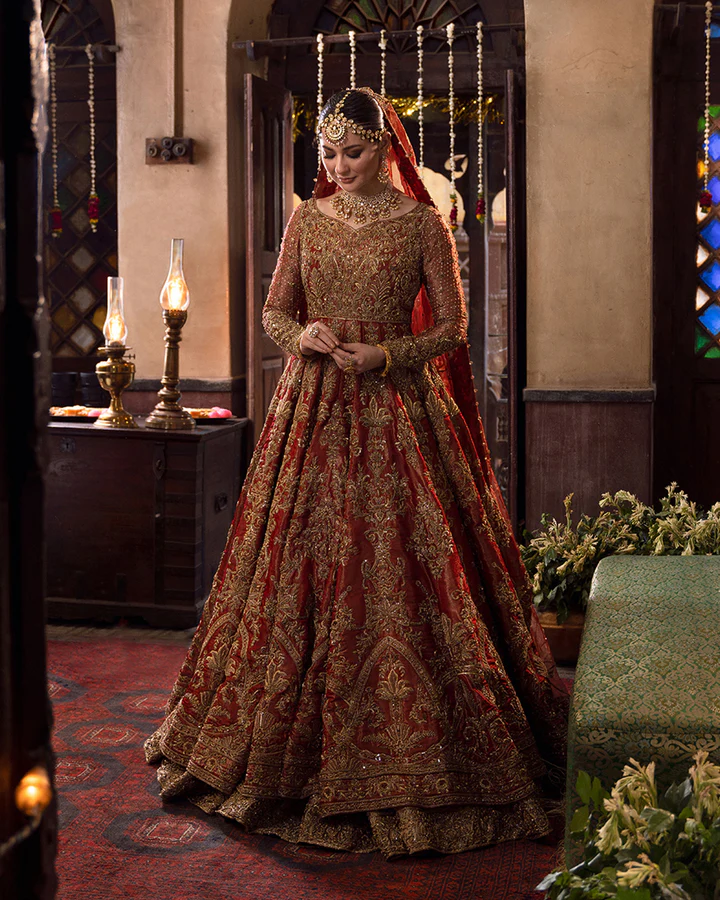
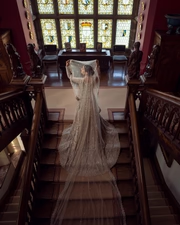
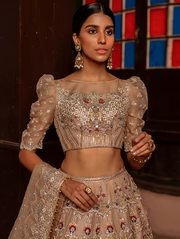
Some brides want their wedding day to feel quiet and reverent. Others want it to feel alive — vivid, energetic, impossible to look away from. Roushana, Mastorat’s striking bridal creation, is designed for the latter. Rendered in a bold, bright red that demands attention the moment it enters a room, Roushana is a celebration of color, movement, and embroidery artistry brought together in a gharara silhouette that has long been associated with festivity and grace.
This is bridal wear designed not just to be worn, but to move — to swirl, sway, and catch light as the bride dances, walks, and celebrates with the people she loves most.
The Composition
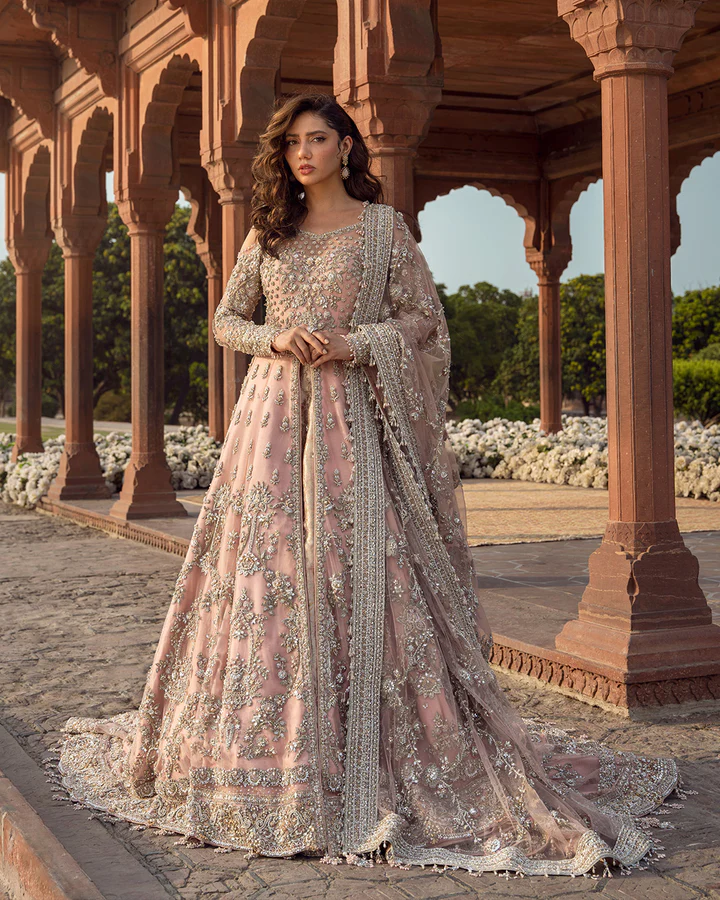
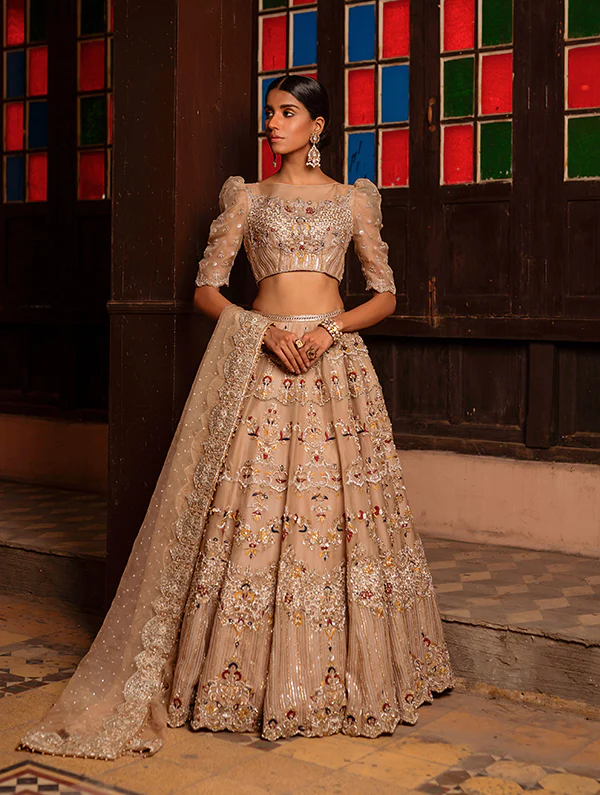
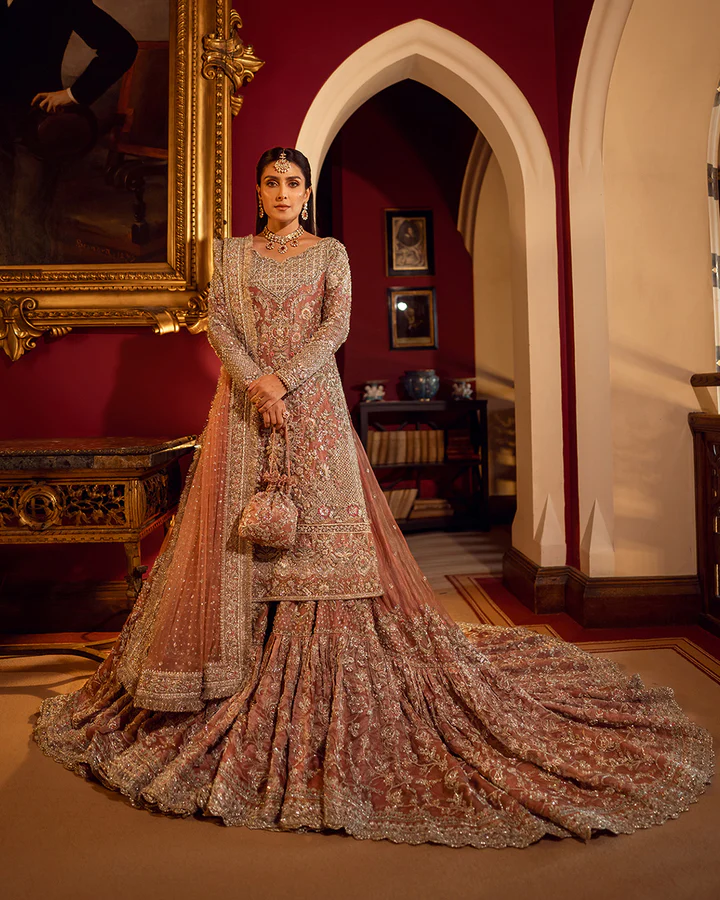
Roushana arrives as a complete four-piece bridal ensemble, each element hand-embellished to maintain a unified, richly worked aesthetic from top to bottom:
- A hand-embellished chiffon shirt, fully embroidered on both the front and back panels. Chiffon’s lightweight, flowing nature makes it an ideal canvas for a bride who wants intricate embroidery without the heaviness often associated with bridal wear, allowing the shirt to move naturally with the body throughout a long day of celebration.
- Hand-embellished chiffon sleeves that extend the embroidered narrative down the arms, ensuring the same density and intention found on the shirt’s body carries through to every visible detail, including hand movements during key rituals like the exchange of rings or a traditional dance.
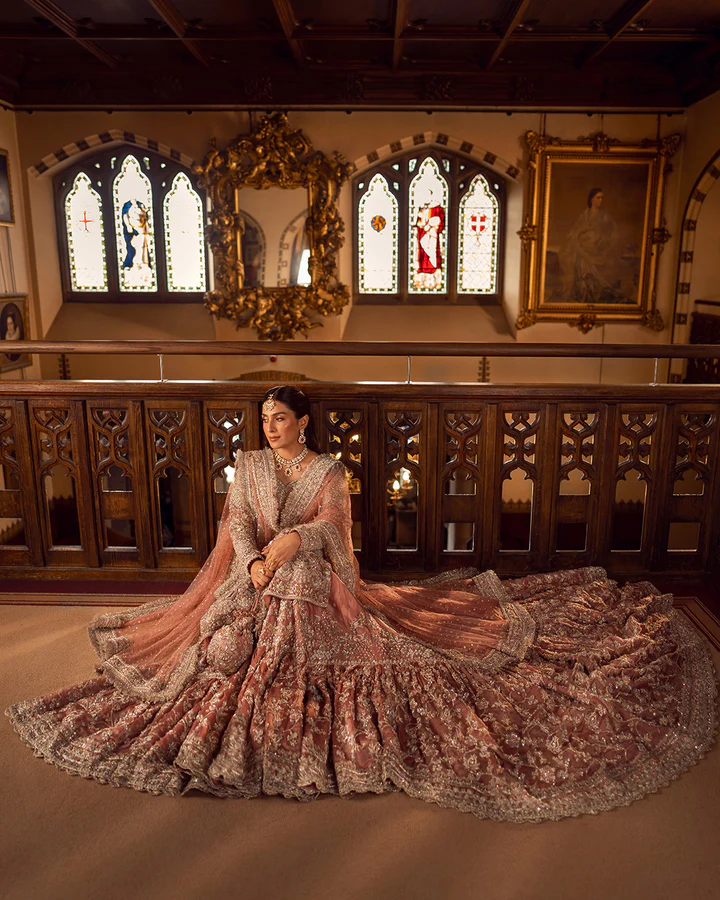
- A hand-embellished Korean raw silk gharara, the defining piece of this ensemble. Gharara — a wide, flared, paneled trouser silhouette — is one of the most theatrical and celebratory styles in South Asian bridal fashion, known for its dramatic movement and voluminous flare. Using Korean raw silk for the gharara adds structure and a subtle natural texture that holds embroidery beautifully while giving the silhouette its signature fullness and shape.
- A hand-embellished net dupatta, light and sheer, designed to soften the overall look while still carrying embroidered detail that ties back to the motifs found throughout the shirt and gharara.
The Embroidery: Florals, Vines, and Generational Technique
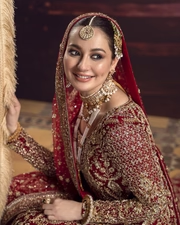
At the heart of Roushana is a traditional floral motif paired with flowing vines, a combination that has anchored South Asian bridal embroidery for generations. Rather than appearing as isolated decorative elements, the florals and vines are designed to move across the fabric the way they would in nature — climbing, curling, and connecting — giving the embroidery a sense of organic continuity rather than rigid repetition.
To bring this motif to life, Mastorat’s artisans employ several of the most demanding hand-embroidery techniques in South Asian textile tradition:
- Dabka — a coiled metallic wire hand-applied to the fabric to create raised, dimensional, light-catching texture. Dabka requires immense precision, as each individual coil must be carefully placed and secured to build volume without compromising the drape of the chiffon or silk beneath it.
- Marori — a fine metallic thread technique used to create delicate, curling detail work, often used to define the edges of florals and vines with intricate, almost hand-drawn precision.
- Resham zardozi — a technique combining resham (silk thread) with zardozi, the historic metallic embroidery tradition once reserved for royal courts. Resham zardozi blends the softness and color depth of silk thread with the opulence and shine of metallic embellishment, producing motifs that feel simultaneously rich and graceful.
Layered together — “among other techniques” — these embroidery methods give Roushana’s florals and vines genuine depth and texture. The interplay of matte silk thread against reflective metallic work means the embroidery shifts in character depending on the light, the angle, and the bride’s movement, creating a living, dynamic surface rather than a static pattern.
Handcrafted, Not Manufactured
Every Mastorat piece, Roushana included, is handcrafted with meticulous care, built through the diligence and dedication of skilled artisans rather than machine production. The density of embroidery across four full garments — shirt, sleeves, gharara, and dupatta — requires laborious hours of focused handwork, often carried out by artisans whose technique has been refined and passed down across generations.
This level of craftsmanship is also why Roushana requires a production timeline of 3 to 4 months. Genuine hand-embroidery of this caliber cannot be rushed without sacrificing the precision and richness that define the piece. Brides are encouraged to place their orders well in advance of their wedding date to ensure Roushana is ready in time for their celebration, with the embroidery given the full time it deserves to be executed properly.
The Energy of Bright Red
While deep, darker reds are often associated with solemnity and tradition, bright red carries a different energy entirely — vibrant, joyful, and full of life. It’s a color choice that suits brides who want their wedding day to feel like a celebration first and foremost, radiating warmth and confidence rather than restraint. Paired with the natural texture of Korean raw silk and the fluid movement of chiffon, Roushana’s bright red feels electric rather than overpowering, striking a balance between boldness and elegance.
A Note on Color
As is natural with vivid, hand-dyed fabrics and dense hand-embroidery, actual colors may slightly vary from the image shown. This is a normal characteristic of fine craftsmanship and dye batching, and should be expected as part of the handmade nature of the piece rather than viewed as an inconsistency.
For the Mastorat Bride
Roushana is for the bride who wants to feel like the center of attention — not through excess, but through genuine artistry rendered in a color that radiates joy. It is a piece designed to move with her, to be admired in motion, and to remain a treasured part of her bridal story long after the celebrations have ended.
Reviews
There are no reviews yet.