
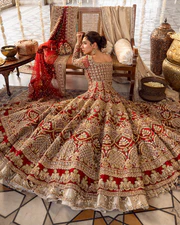
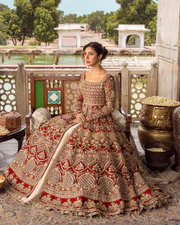
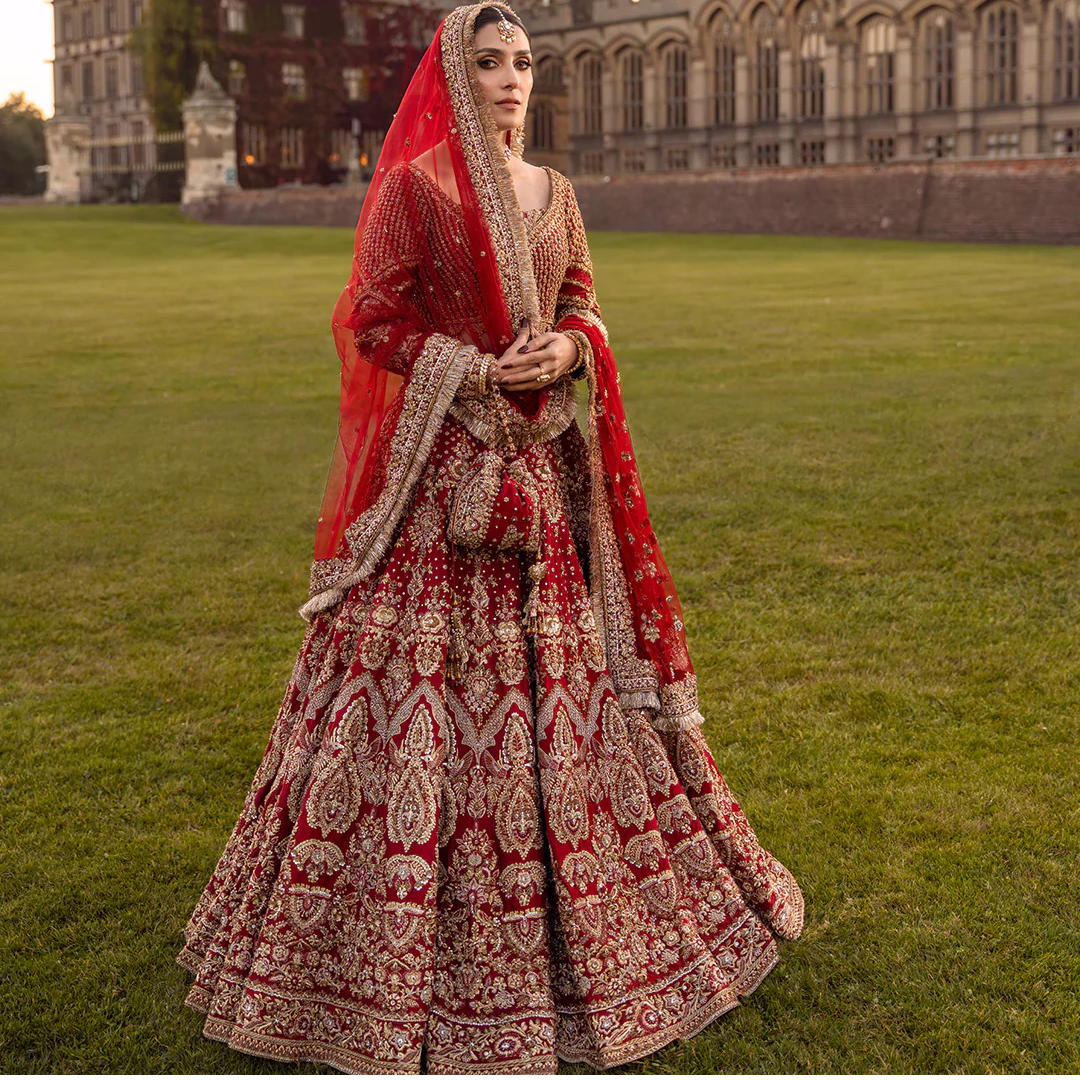
There are silhouettes that simply dress the body, and then there are silhouettes that tell a story — Juri belongs unmistakably to the latter. Conceived as a celebration of heritage artistry reimagined for the contemporary bride, Juri is a masterclass in restraint meeting opulence, where every inch of fabric has been touched, considered, and elevated by hand. This is not merely an outfit; it is an heirloom in the making, destined to be passed down, spoken of, and remembered long after the wedding season fades.
An Open Silhouette Rooted in Royal Tradition
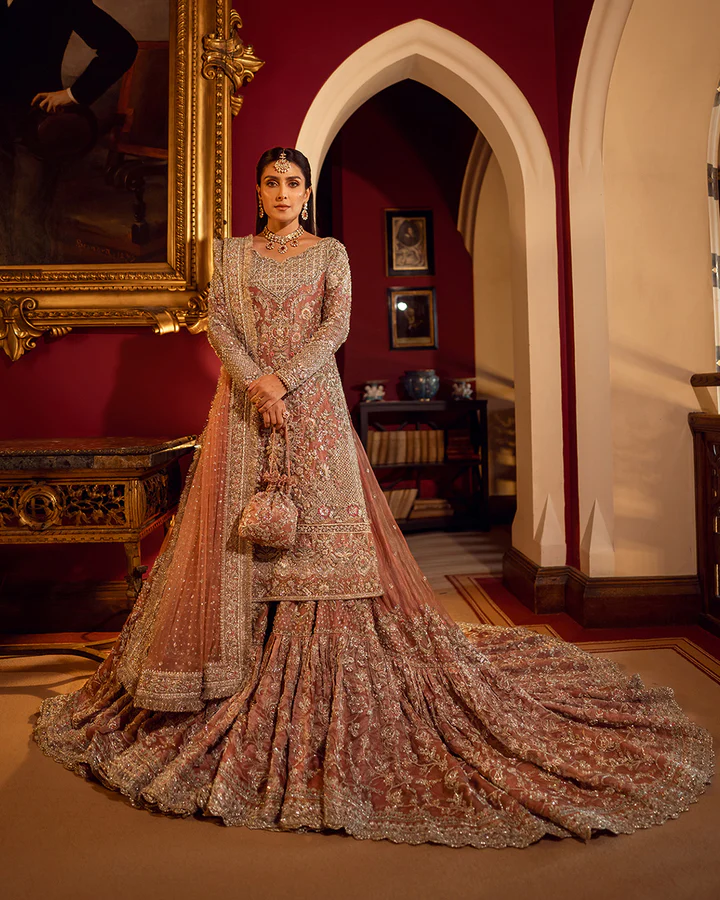
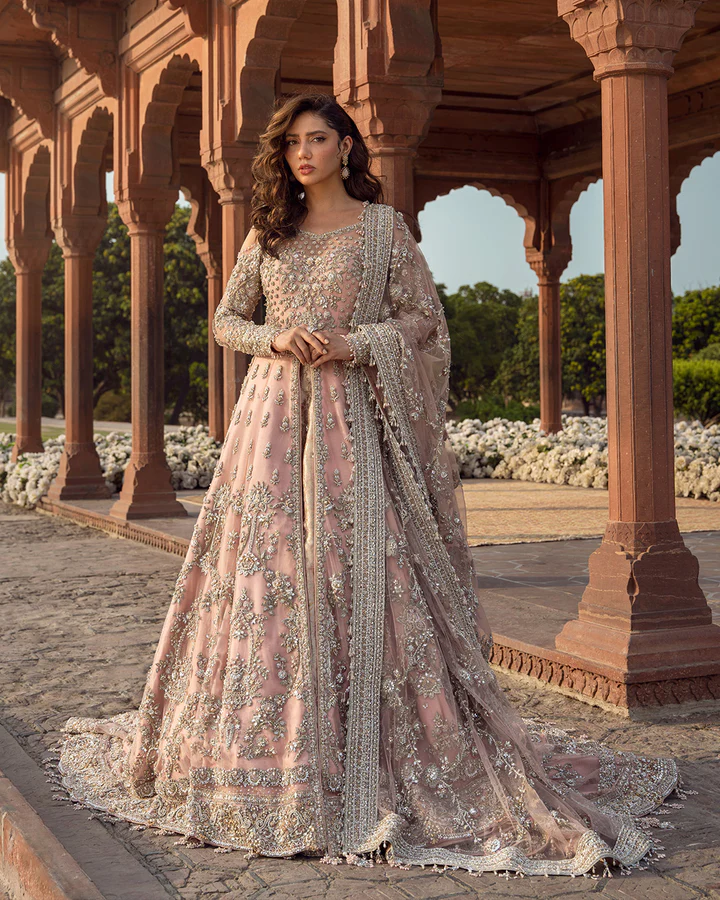
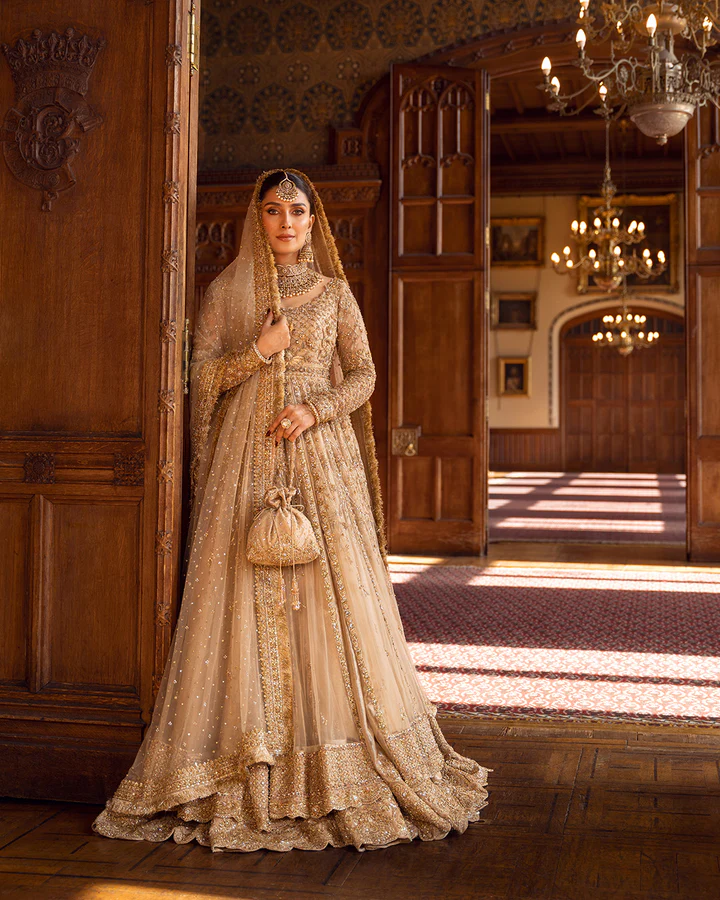
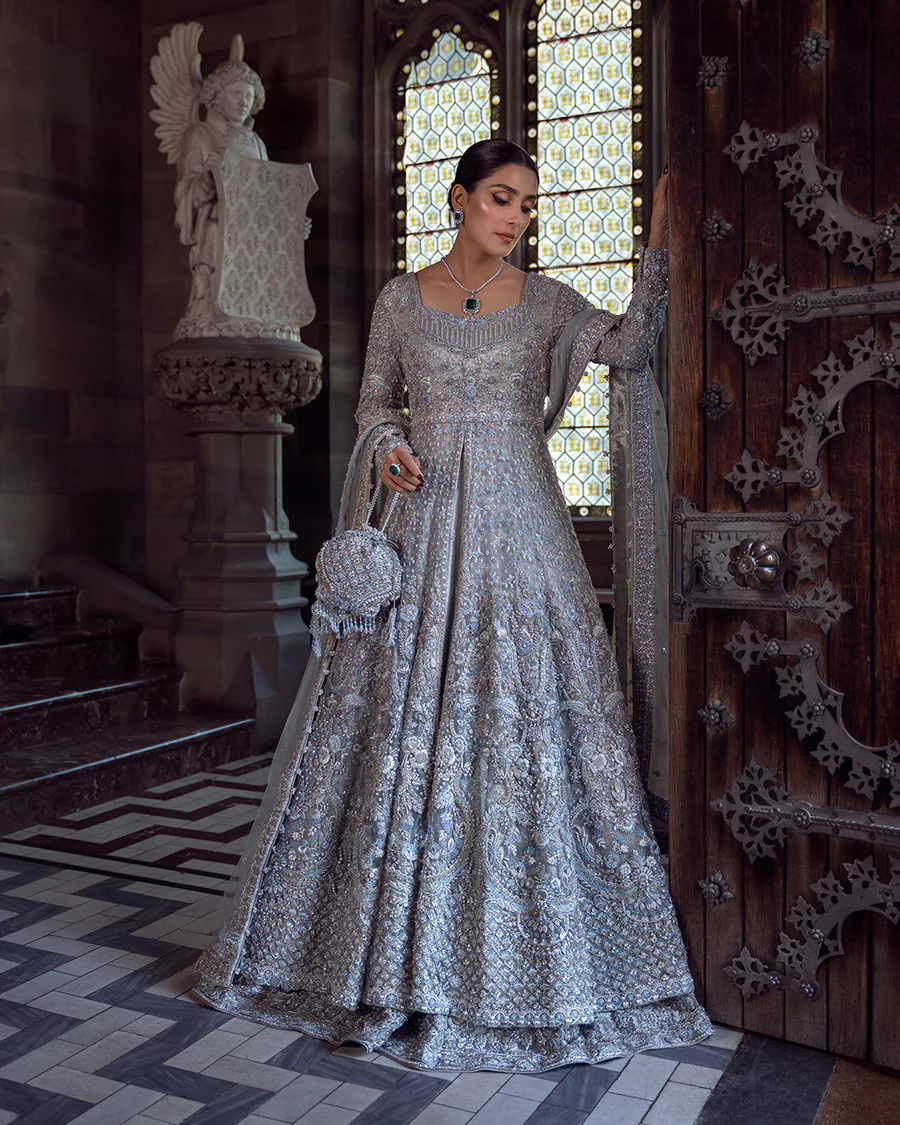
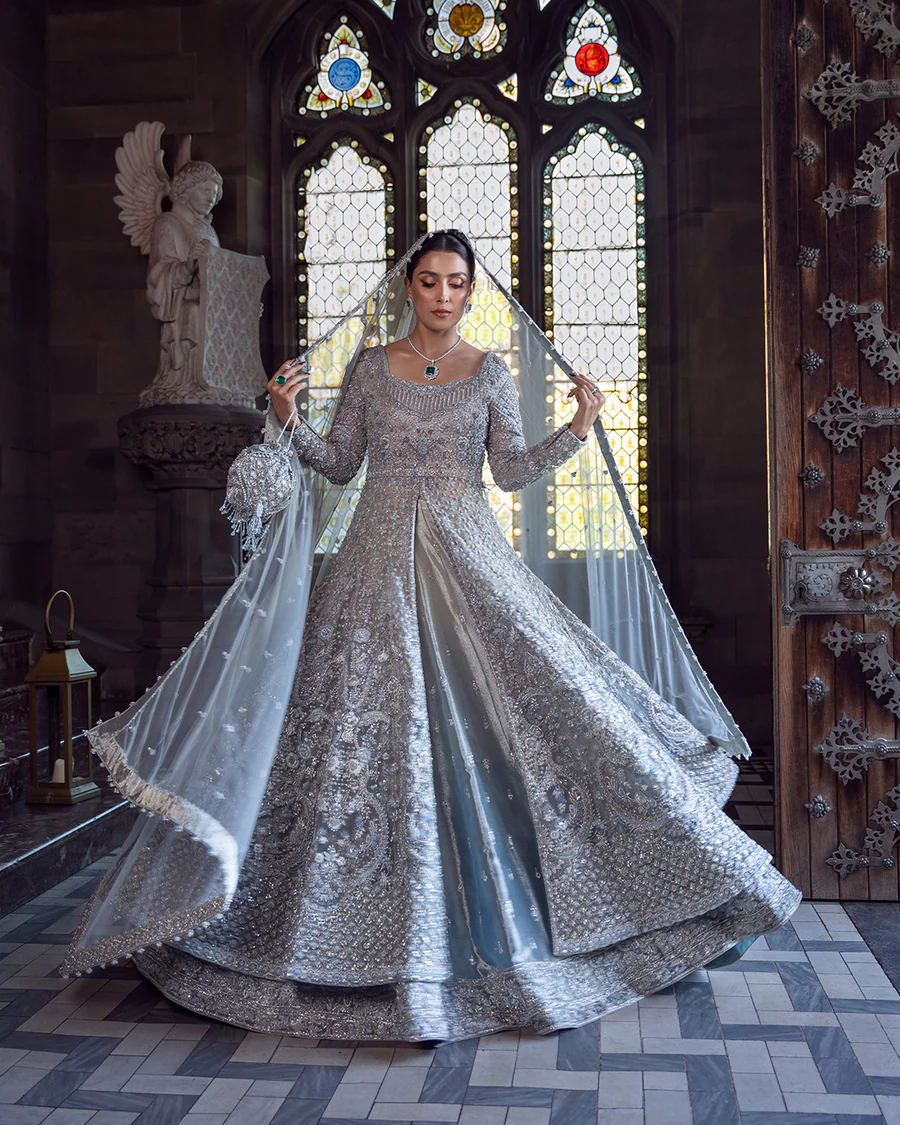
At the heart of Juri is its open-cut pishwas gown — a silhouette that has graced South Asian bridal tradition for generations, prized for its fluidity, its drama, and the way it moves with the wearer rather than against her. Crafted in luxurious organza, the gown opens gracefully from the bodice, allowing the richness of the tissue lehnga beneath to reveal itself with every step and every turn. This open construction is a deliberate design choice, one that speaks to a modern bride who wants tradition without rigidity, grandeur without weight, and drama without losing an ounce of grace.
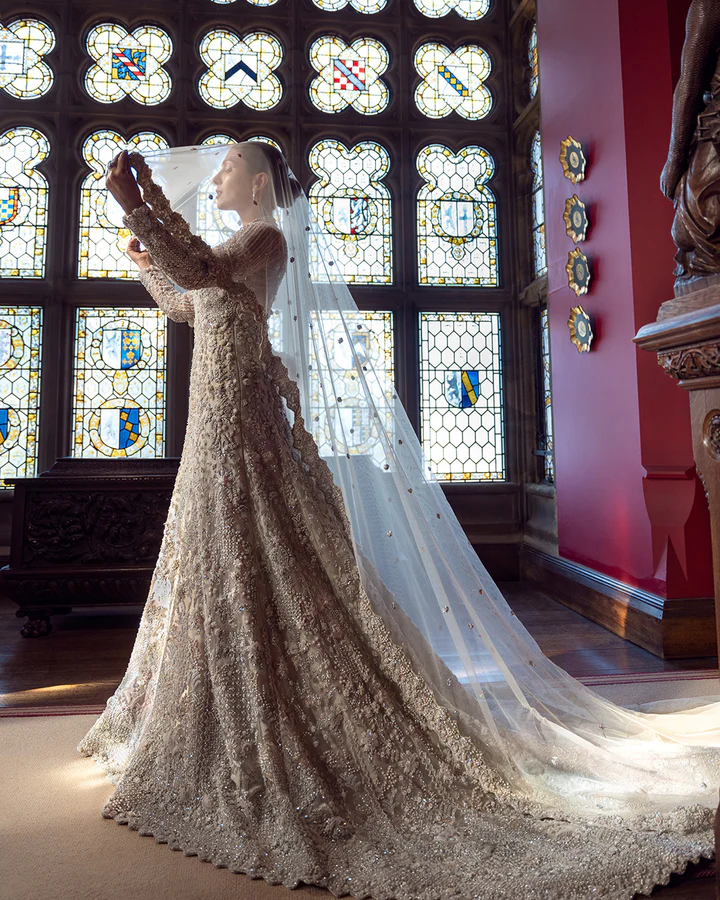
The organza itself has been chosen for its inherent luminosity. Light plays differently across organza than it does on heavier brocades or silks — it catches embellishment in a way that makes embroidery appear to float rather than sit on the surface. This is precisely why Juri’s embellishment work feels less like decoration and more like an extension of the fabric’s own character.
The Artistry of Hand Embellishment
Juri’s true distinction lies in the sheer breadth of artisanal techniques layered into its construction — each one historically significant, each one demanding hours of skilled handwork that cannot be replicated by machine.
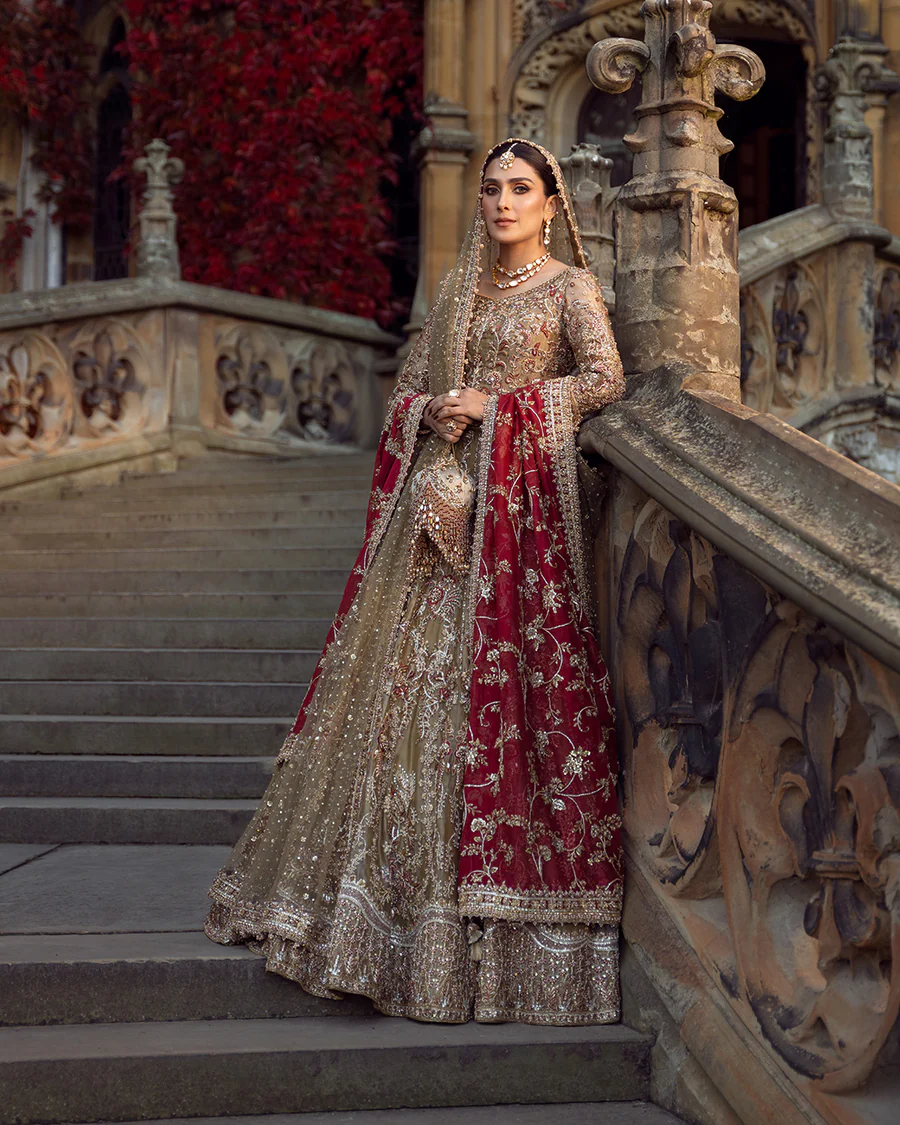
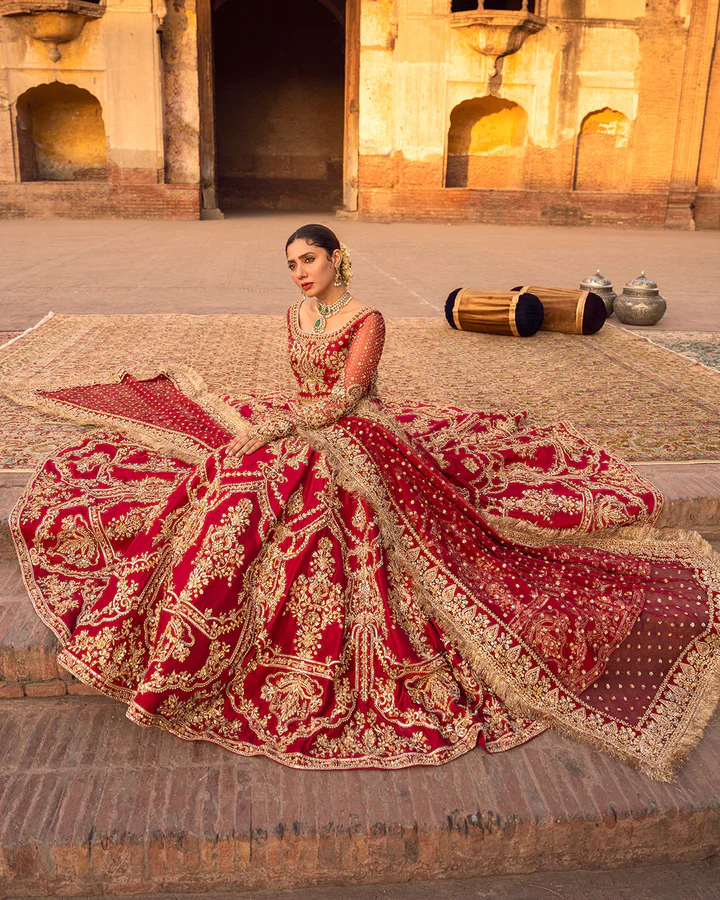
The pishwas front and back are adorned with decorative arabesques, filled generously with a bejewelled dabbi jaal. This jaal work — a net-like, repeating lattice pattern — has long been associated with regal Mughal-era textile traditions, where artisans would spend weeks filling intricate frameworks with stones, sequins, and metallic thread. Here, the dabbi jaal has been rendered with painstaking precision, each “box” within the lattice carefully filled to create a cohesive, shimmering expanse that catches light from every angle.
The bodice, meanwhile, is where the gown reaches its most lavish expression. Laden with booti work in tilla, dabka, sequins, and crystals, the bodice becomes a focal point of textured opulence. Tilla — a traditional gold and silver thread embroidery technique — has been used for centuries to denote regality and occasion-wear of the highest order. Dabka, a coiled metallic wire embroidery, adds dimensional texture that tilla alone cannot achieve, creating a raised, almost sculptural quality across the bodice. When paired with hand-placed sequins and crystals, the result is a bodice that feels less embroidered and more jewelled — an effect achieved only through the patient layering of multiple techniques by master artisans.
Even the sleeves have not been left as an afterthought. Crafted in delicate net and hand embellished to match the richness of the bodice and pishwas, the sleeves ensure that the embellishment story continues seamlessly across the entire gown, with no part of the silhouette feeling secondary to another.
A Lehnga Worthy of the Gown Above It
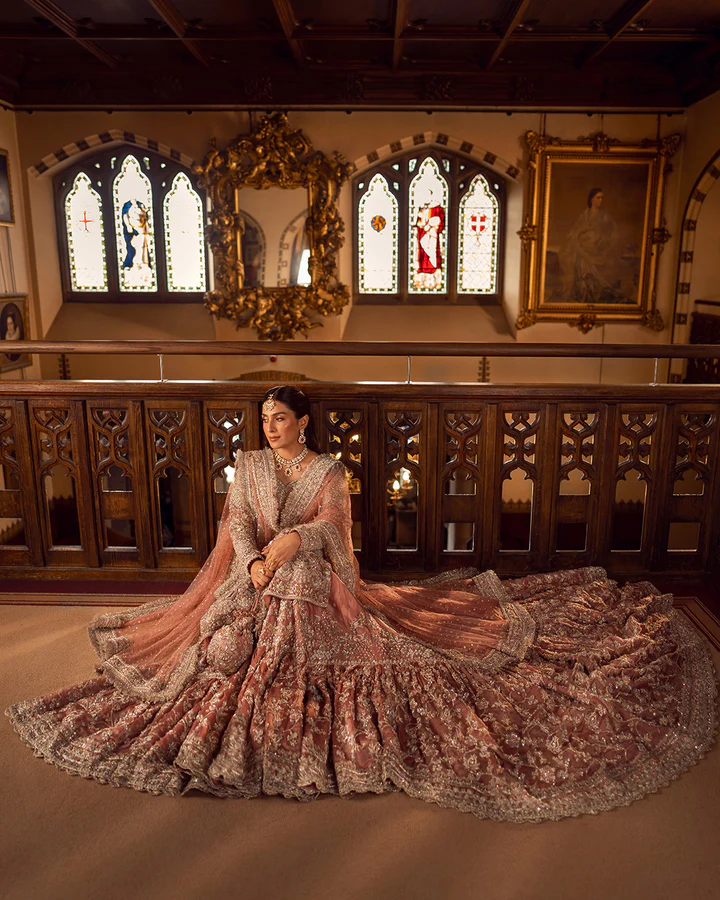
Beneath the open pishwas lies a hand embellished tissue lehnga — a fabric choice that brings its own quiet luxury to the ensemble. Tissue, with its fine, almost metallic sheen, has long been favoured in bridal wear for the way it drapes with structure while still catching light beautifully. The embellishment carried through onto the lehnga ensures that the richness of the gown above is never abruptly cut off; instead, the eye is guided downward through a continuous narrative of zardozi, sequins, and jewel-work, all the way to the hem.
This attention to continuity is what separates a truly considered bridal ensemble from one that simply layers pieces together. In Juri, the gown and lehnga are designed as a singular composition — one where the open silhouette exists specifically to showcase what lies beneath, rather than to conceal it.
The Dupatta: A Fully Bedecked Finishing Statement
No bridal ensemble of this calibre would be complete without a dupatta to match its grandeur, and Juri’s net dupatta delivers exactly that. Fully hand embellished, the dupatta has been treated not as an accessory but as an extension of the gown itself — bedecked with the same scintillating works of zari, sequins, and zardozi that define the rest of the ensemble. Lightweight net allows the embellishment to take centre stage without adding unnecessary weight, ensuring the dupatta drapes elegantly over the shoulders or can be styled to frame the face, depending on the bride’s preference for her chosen moment.
A Fusion of Craft, Built for Modern Heirloom Status
What makes Juri remarkable is not any single element, but the way zari, sequins, zardozi, tilla, dabka, and crystal work have been brought together into one cohesive, scintillating whole. This is bridal couture that draws from centuries of South Asian textile heritage while being cut and constructed for the modern bride — one who wants her wedding ensemble to feel monumental in person, timeless in photographs, and worthy of being preserved for the next generation.
Juri is, in every sense, a fusion of luxurious artworks — an open-cut silhouette impeccably crafted in organza, generously embellished, and finished with a dupatta as bedecked as the gown it accompanies. It is bridal wear designed not just for a single day, but for a lifetime of memory.
Please note: the colour of the item received may vary slightly from the product shoot due to differences in studio lighting at the time of photography. Shipping time: 3 months.
Reviews
There are no reviews yet.