
Sale!


Original price was: ₨11,000.00.₨9,999.00Current price is: ₨9,999.00.
Sale!


Original price was: ₨11,000.00.₨9,999.00Current price is: ₨9,999.00.
Sale!


Original price was: ₨11,000.00.₨9,999.00Current price is: ₨9,999.00.
Sale!
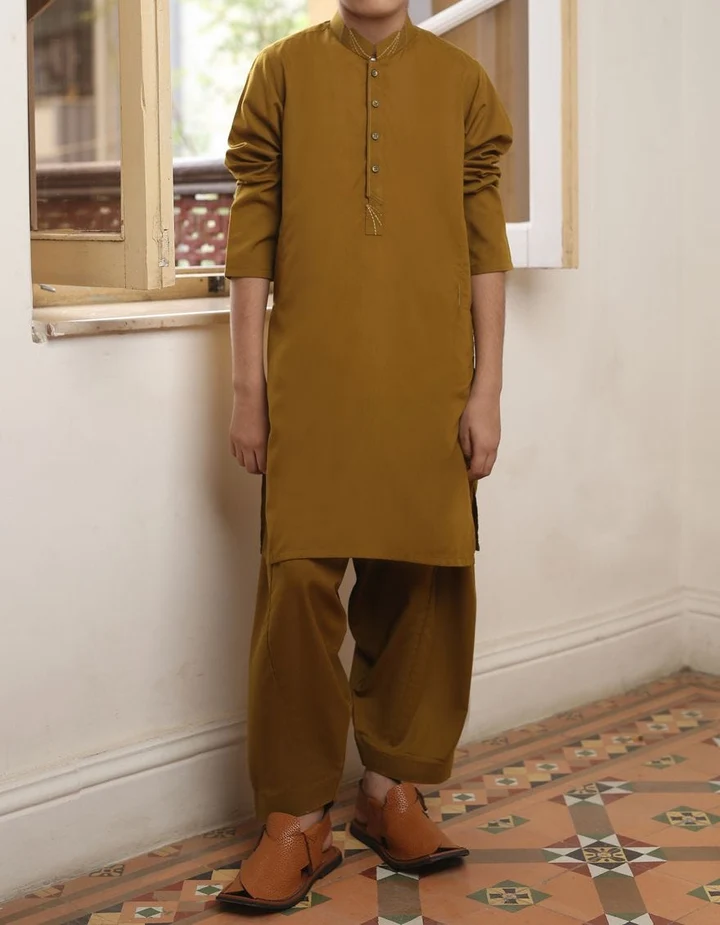
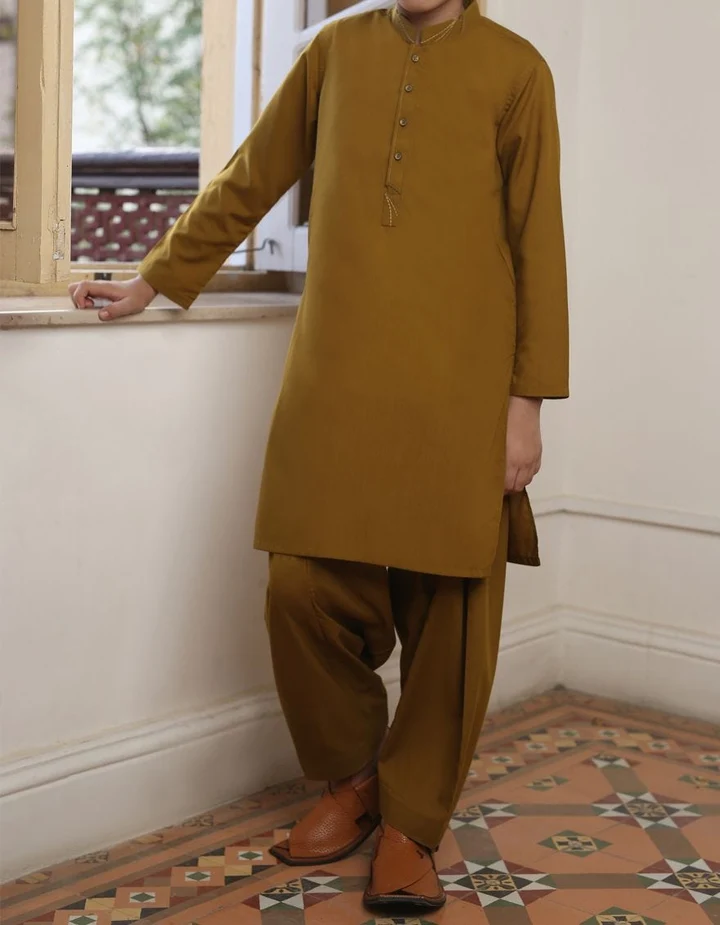
Original price was: ₨11,000.00.₨9,999.00Current price is: ₨9,999.00.
Sale!
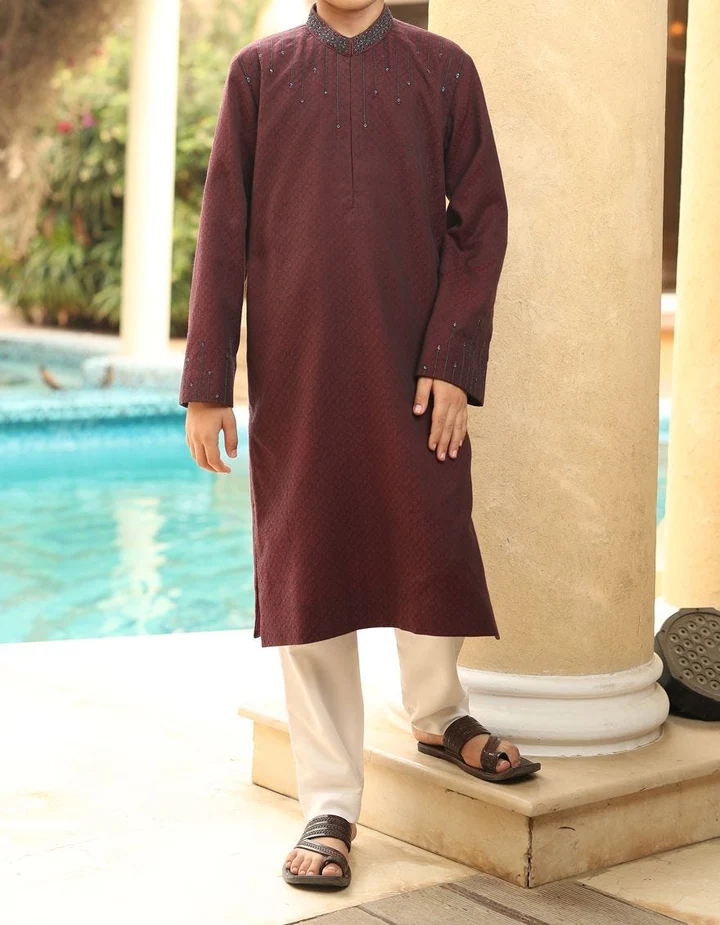
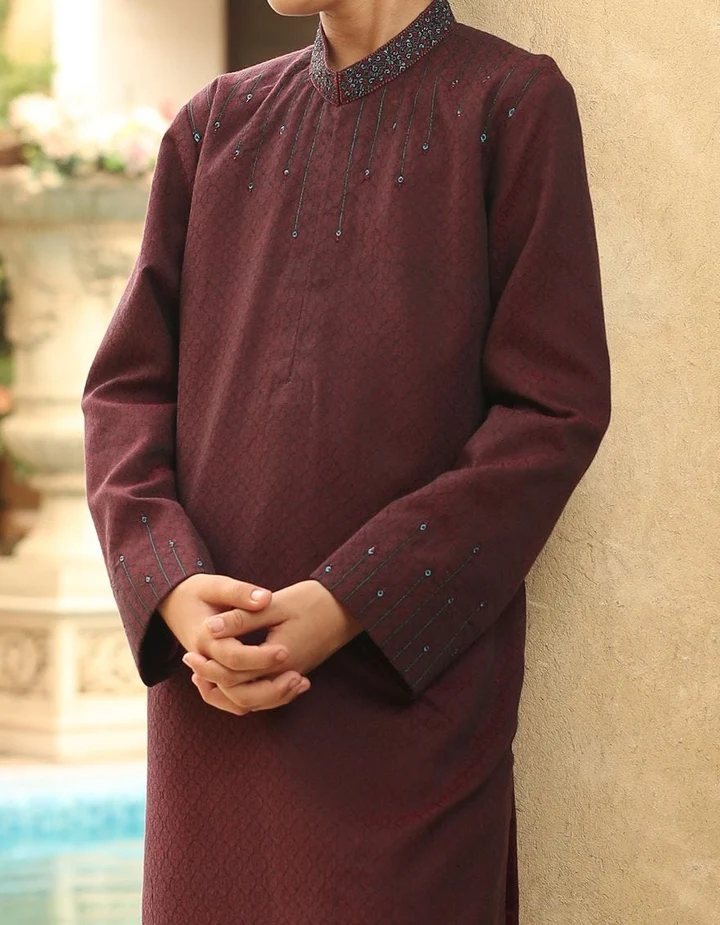
Original price was: ₨11,000.00.₨9,999.00Current price is: ₨9,999.00.
Sale!
Original price was: ₨11,000.00.₨9,999.00Current price is: ₨9,999.00.
Sale!
Original price was: ₨11,000.00.₨9,999.00Current price is: ₨9,999.00.
Sale!
Original price was: ₨10,000.00.₨6,999.00Current price is: ₨6,999.00.
Sale!
Original price was: ₨10,000.00.₨6,999.00Current price is: ₨6,999.00.
Sale!
Original price was: ₨10,000.00.₨6,999.00Current price is: ₨6,999.00.
Sale!
Original price was: ₨10,000.00.₨6,999.00Current price is: ₨6,999.00.
Sale!
Original price was: ₨10,000.00.₨6,999.00Current price is: ₨6,999.00.
Sale!
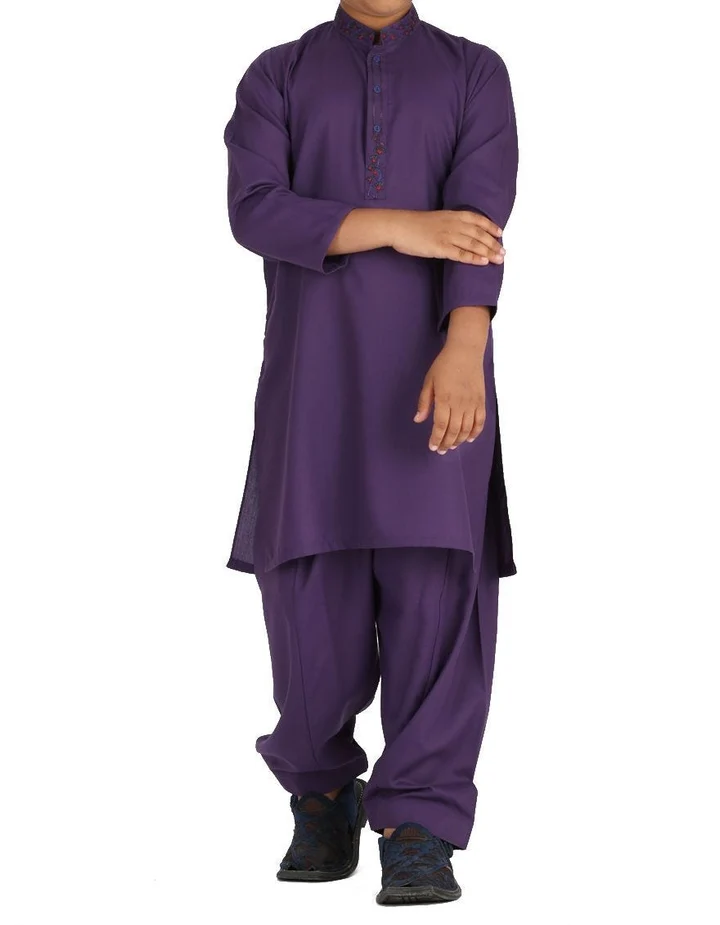
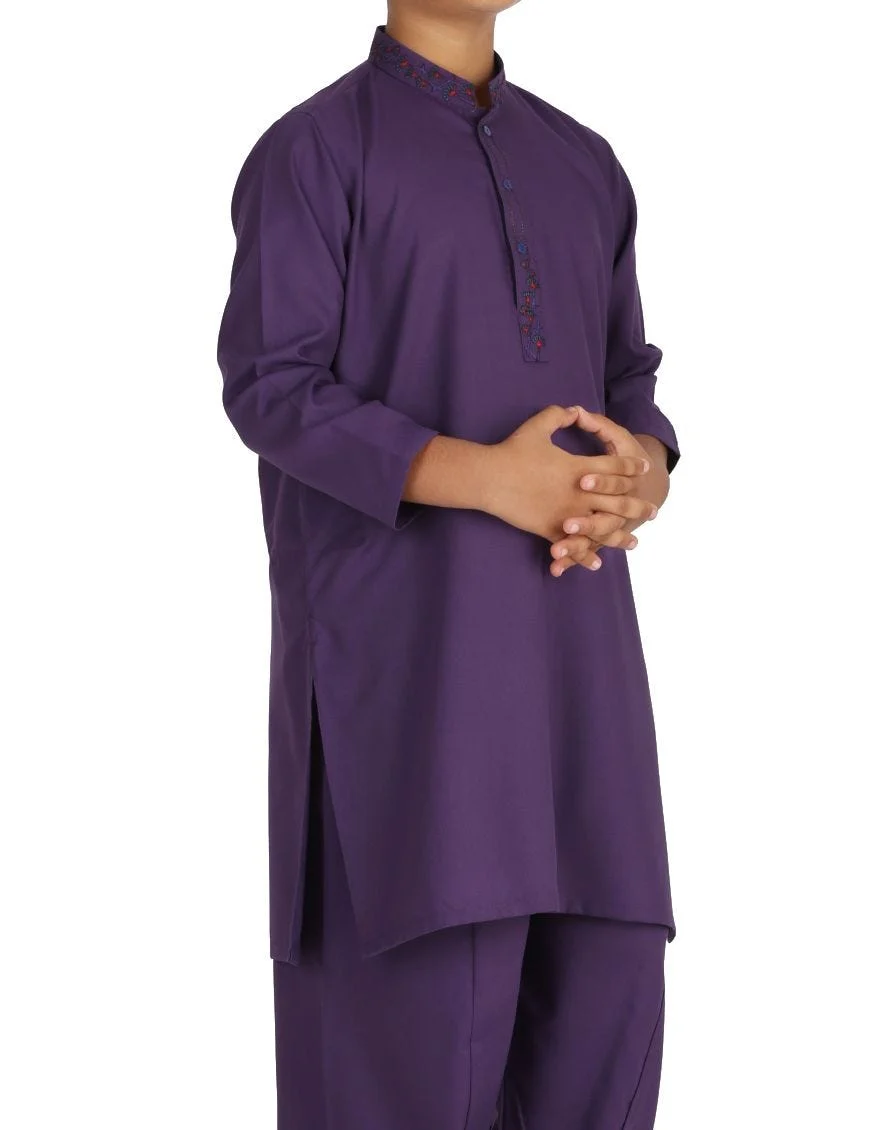
Original price was: ₨10,000.00.₨6,999.00Current price is: ₨6,999.00.
Sale!
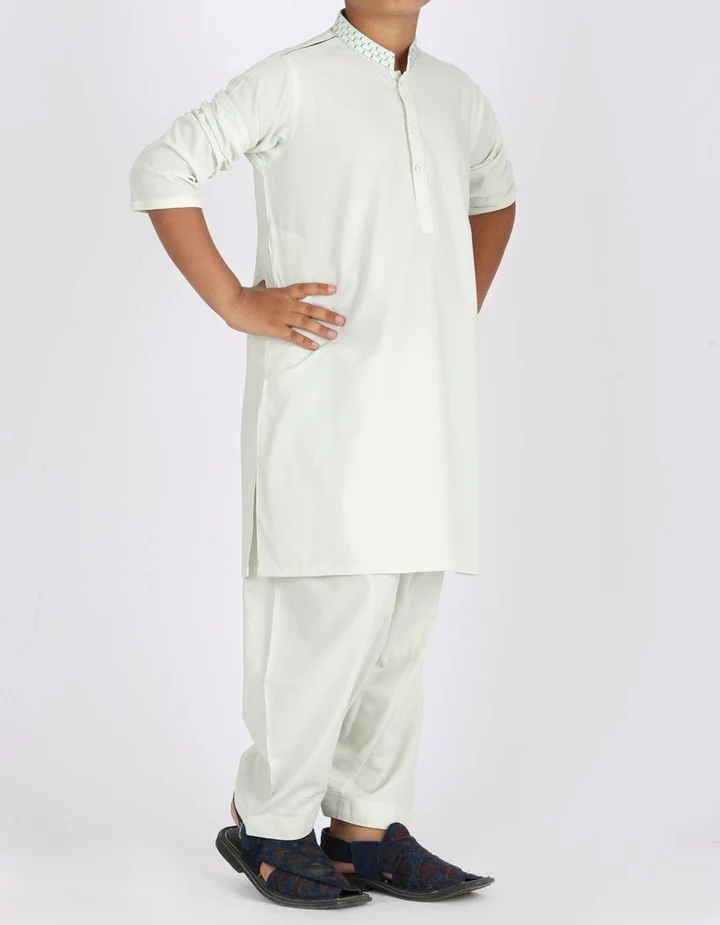
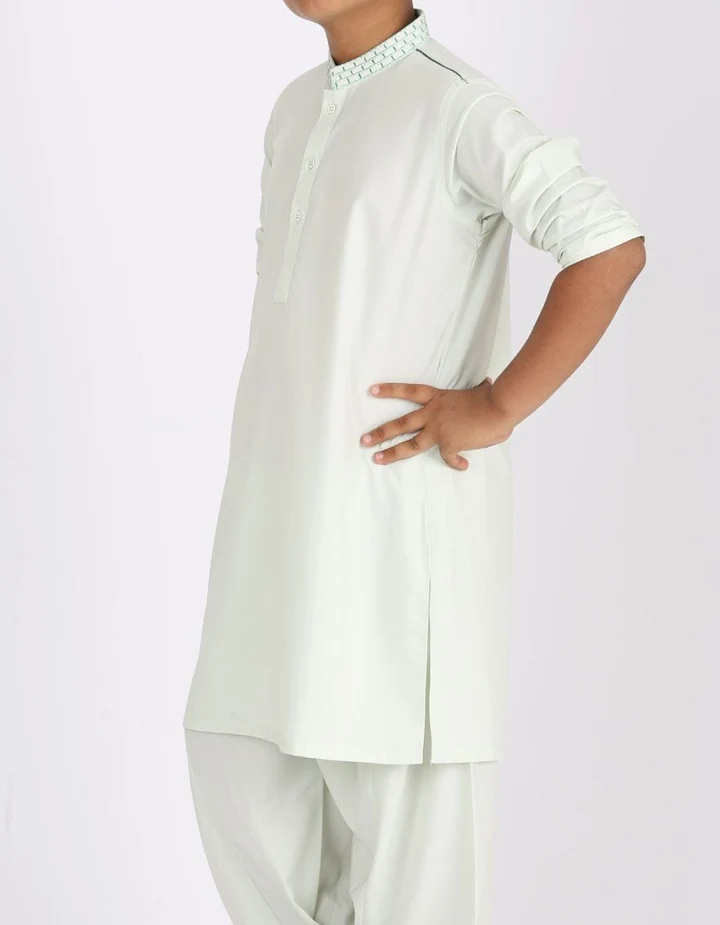
Original price was: ₨10,000.00.₨6,999.00Current price is: ₨6,999.00.
Sale!
Original price was: ₨10,000.00.₨6,999.00Current price is: ₨6,999.00.
Sale!
Original price was: ₨10,000.00.₨6,999.00Current price is: ₨6,999.00.
Sale!
Original price was: ₨10,000.00.₨6,999.00Current price is: ₨6,999.00.
Sale!

Original price was: ₨10,000.00.₨6,999.00Current price is: ₨6,999.00.
Sale!
Original price was: ₨10,000.00.₨6,999.00Current price is: ₨6,999.00.
Sale!
Original price was: ₨10,000.00.₨6,999.00Current price is: ₨6,999.00.
Sale!

Original price was: ₨11,000.00.₨9,999.00Current price is: ₨9,999.00.
Walk into any menswear shop serving South Asian communities in Birmingham, Bradford, Leicester, London or Manchester during the weeks before Eid, and you will see the same thing: customers who know exactly what they want, and who are quick to walk out if the fit, fabric or finish is off. A men’s shalwar kameez is not an impulse purchase. It is worn to Friday prayers, to weddings, to family gatherings and, increasingly, to the office and the weekend. People expect it to last, and they remember where they bought it.
Mastorat supplies men’s shalwar kameez to shops, boutiques and online sellers who want dependable stock without the guesswork. This page explains what we make, how the range is organised, what you can expect on quality, ordering and delivery, and how other retailers plan their buying through the year. If you would rather skip straight to the numbers, you can request our current catalogue and price list.What you will find in our men’s range
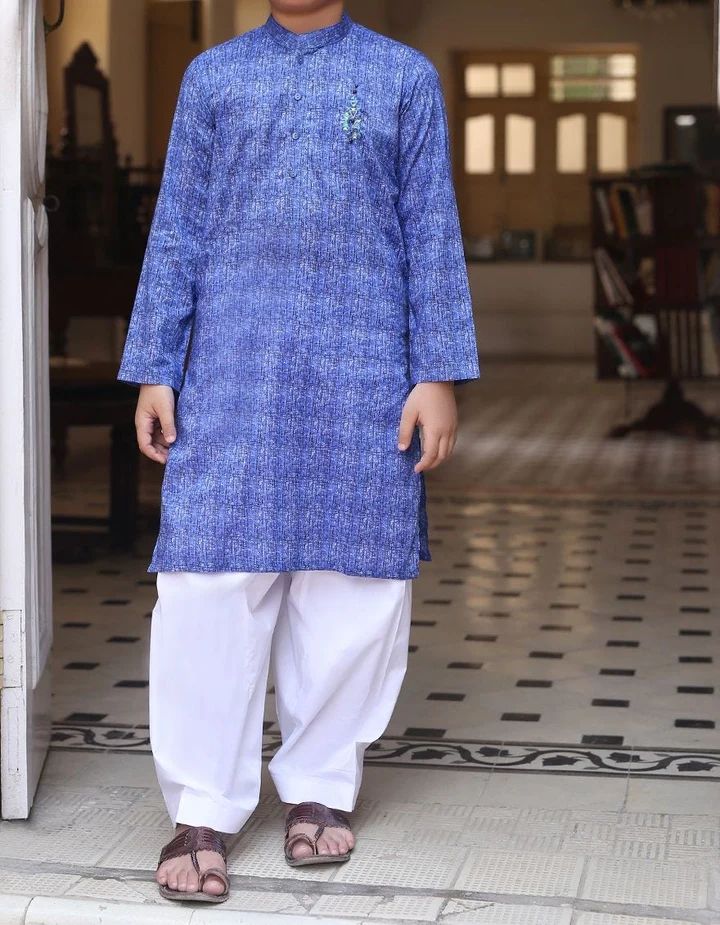
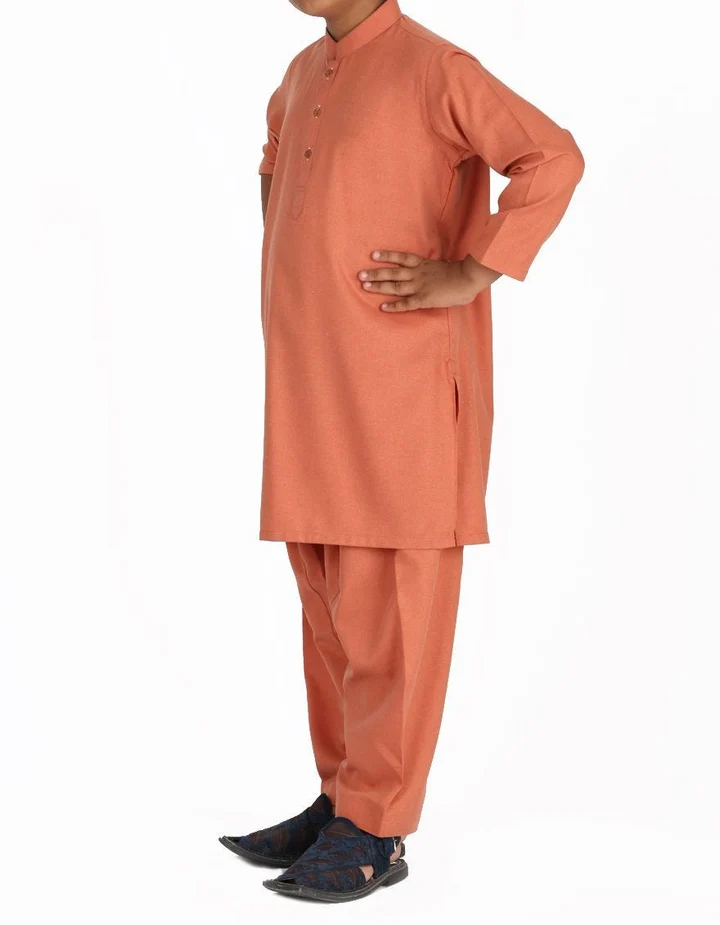
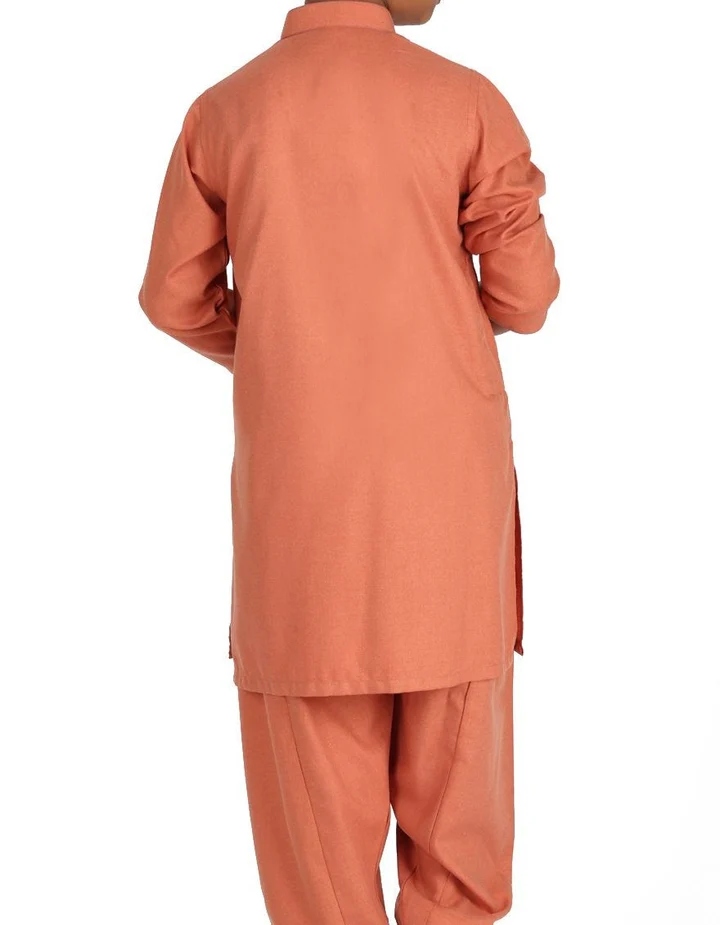
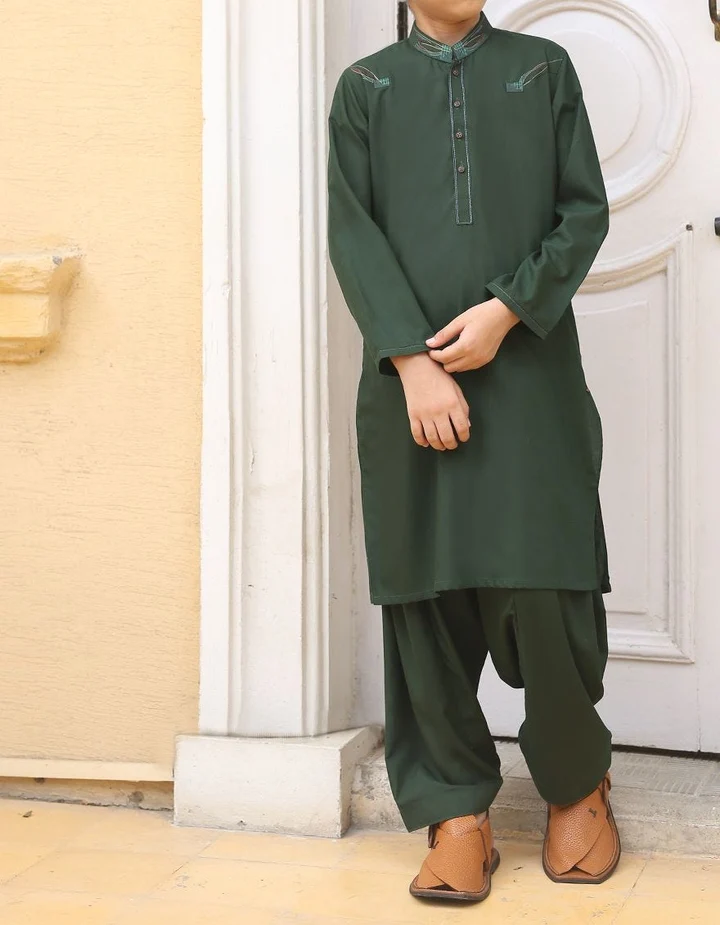
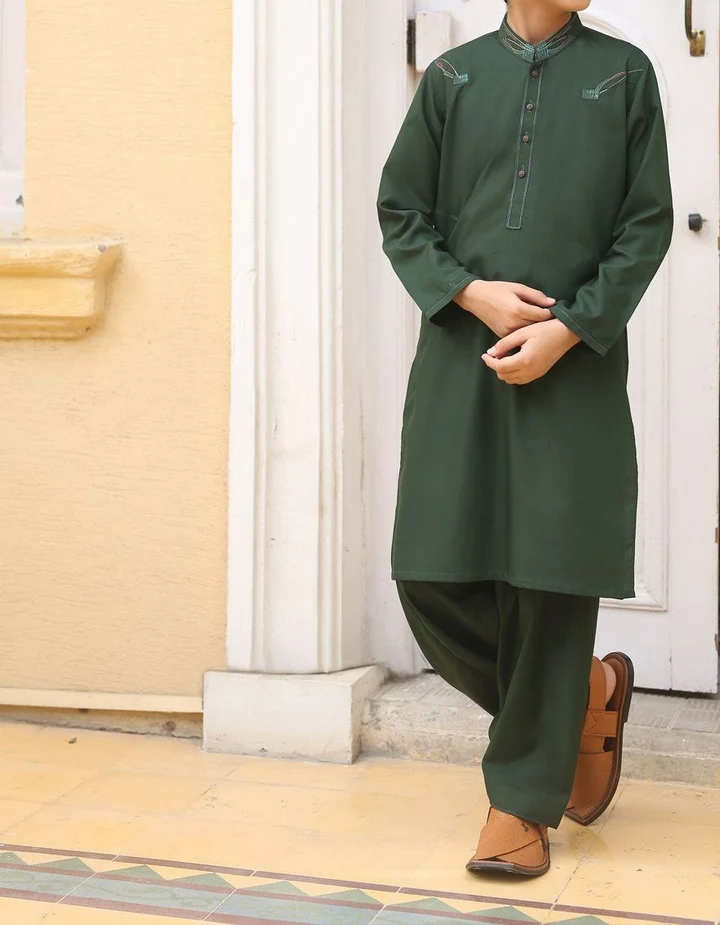
Our men’s collection is built around the way retailers actually sell. Instead of a sprawling catalogue where everything looks alike, we organise the range into a few clear groups so you can decide quickly what belongs on your rails. The core of the range is the two-piece suit: a kameez, which is the long shirt, and a shalwar, the trousers, sold as a set in one fabric and colour. Around that core sit kurta-only pieces for customers who already own trousers, embroidered festive sets for Eid and weddings, and plain everyday suits that move steadily all year. Most designs come in a spread of colours, from the whites and creams that dominate summer and Friday prayers to deeper maroons, teals and charcoals that sell well in autumn and winter. Every design carries a code, such as M2750 or C-10206, so reordering a style that worked is as simple as quoting the number. That sounds minor, but anyone who has tried to reorder from a supplier by describing a photograph knows how much time it saves. If you run a family-oriented shop, the men’s range sits comfortably alongside our kids’ collection and ladies’ clothing. That makes it easier to offer matching outfits for Eid photographs and wedding events without juggling several suppliers.Styles and cuts
The same fabric can look completely different depending on the cut, and customers often choose by silhouette before they look at colour. These are the main styles we supply.Classic collar
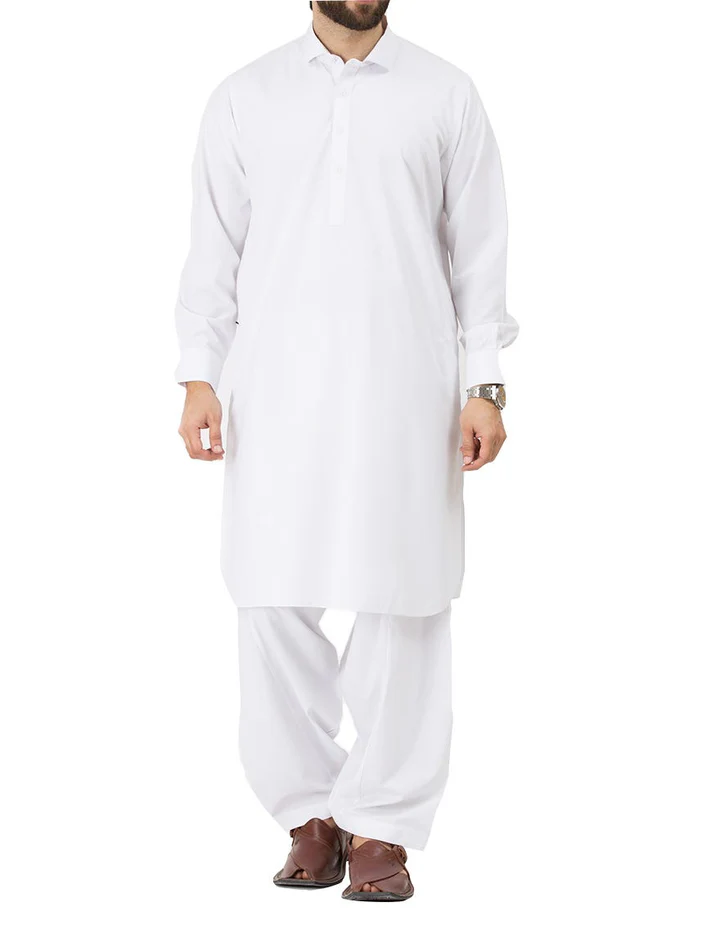
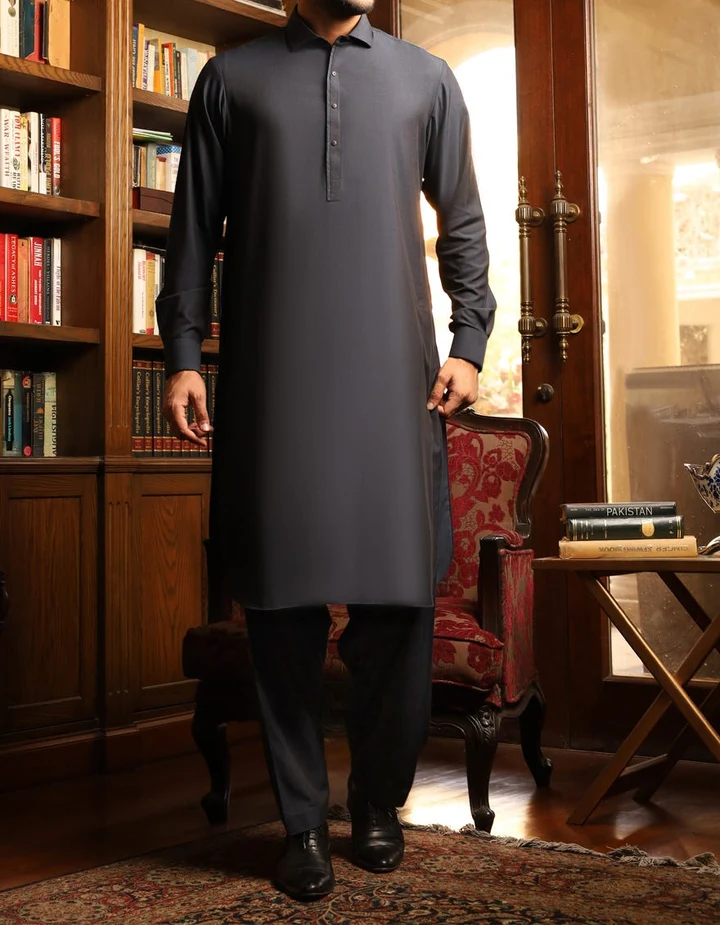
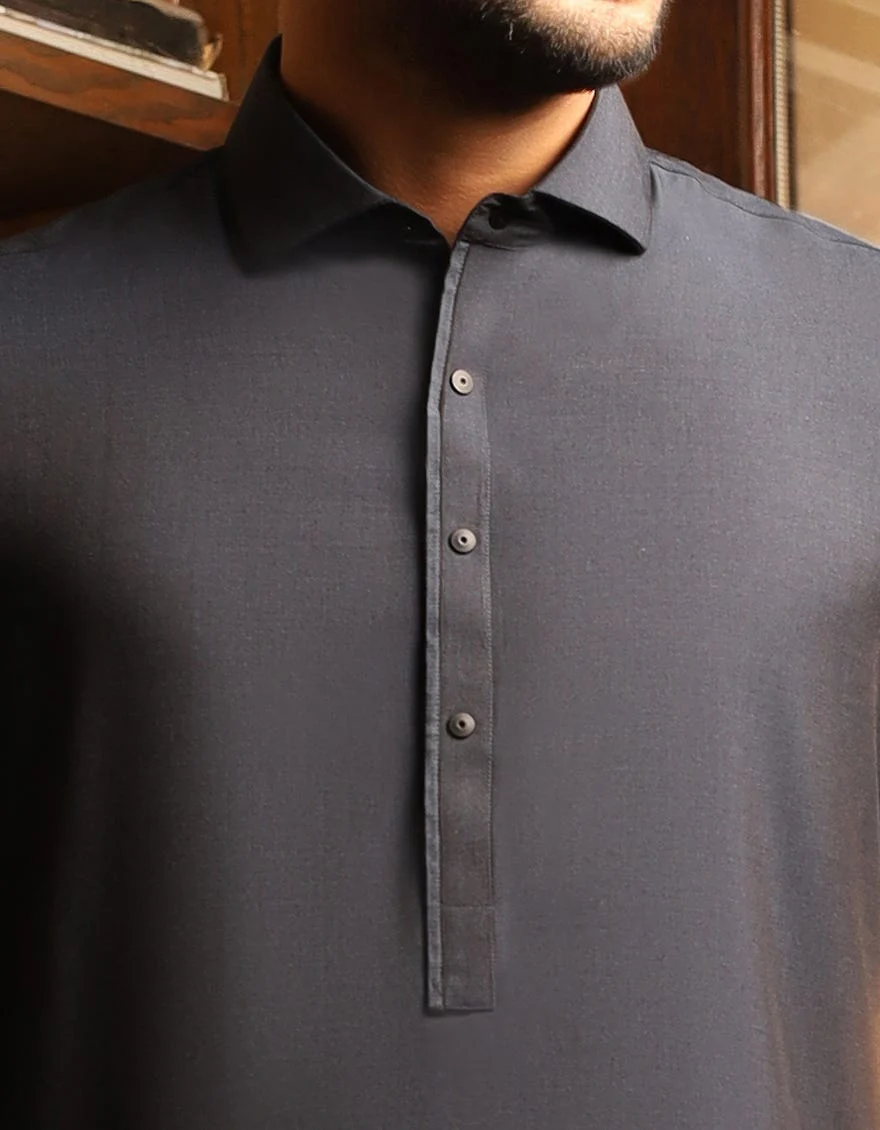
A shirt-style collar with a button placket is the most traditional choice and the easiest to sell to customers of every age. It works for the workplace, for prayers and for family visits, and it photographs well. Older customers often default to it, which makes it a reliable base for any first order.Band collar
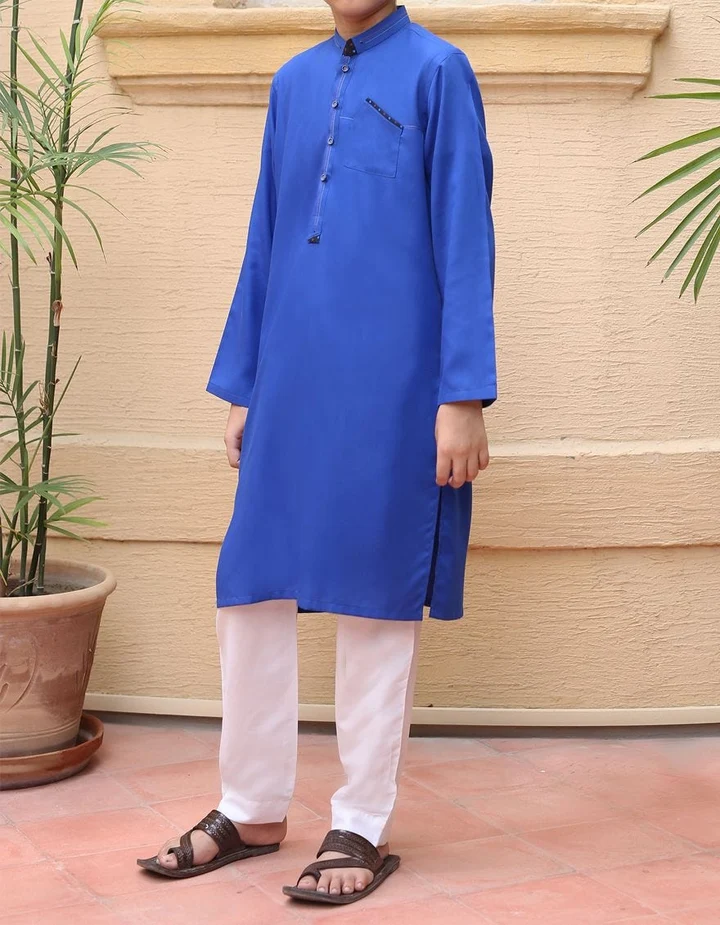
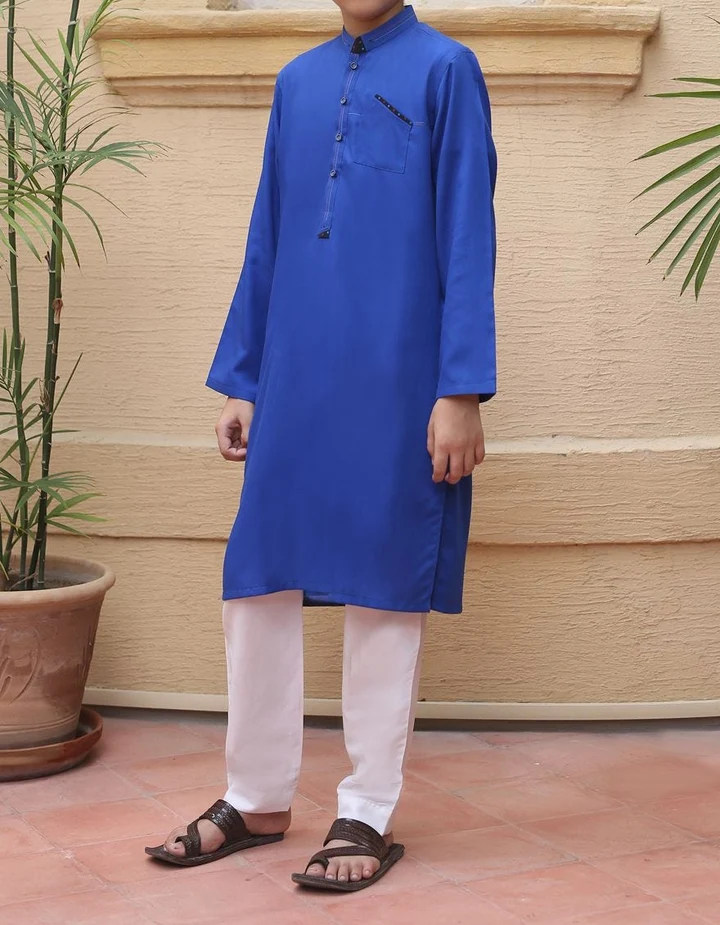
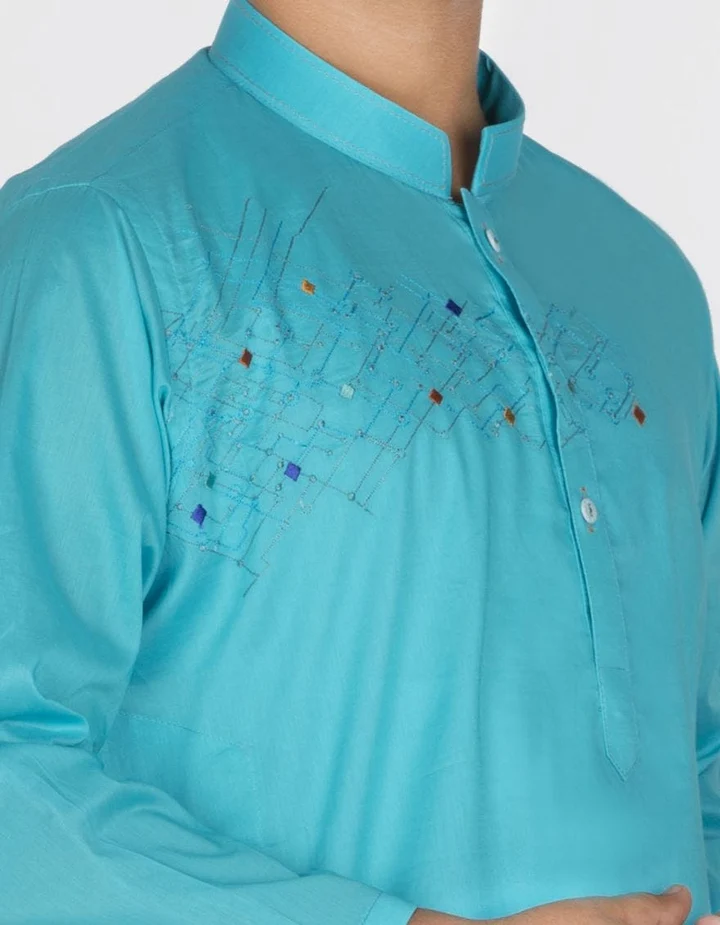
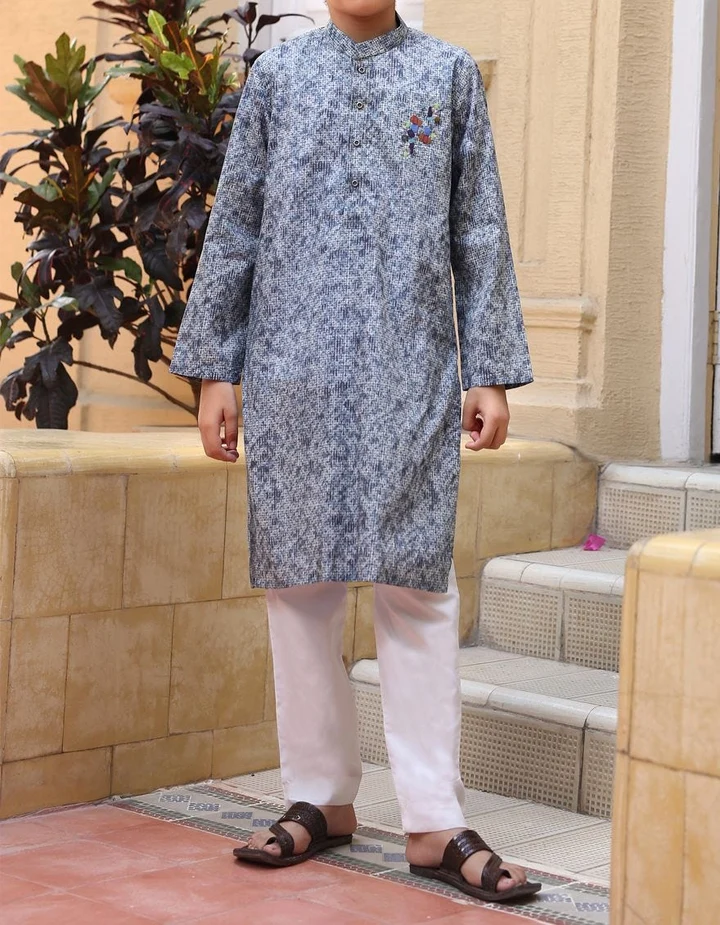
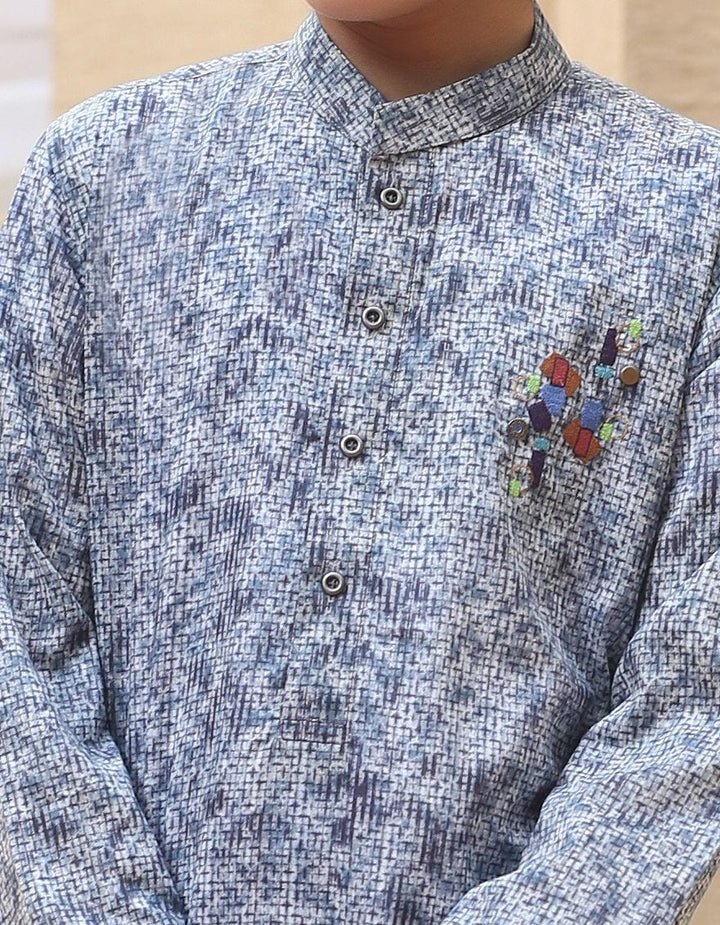
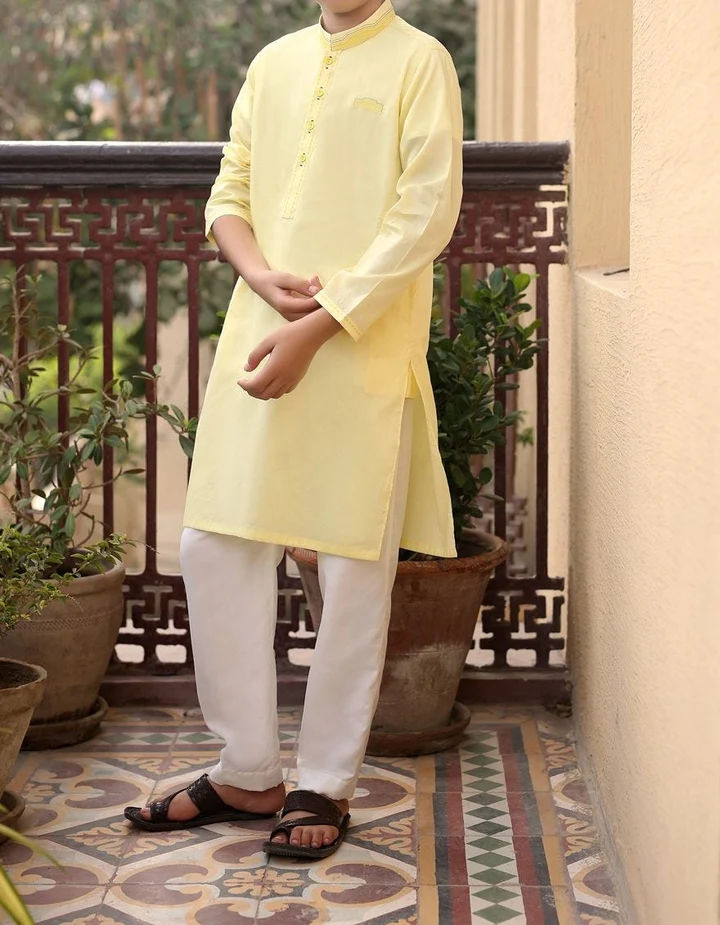
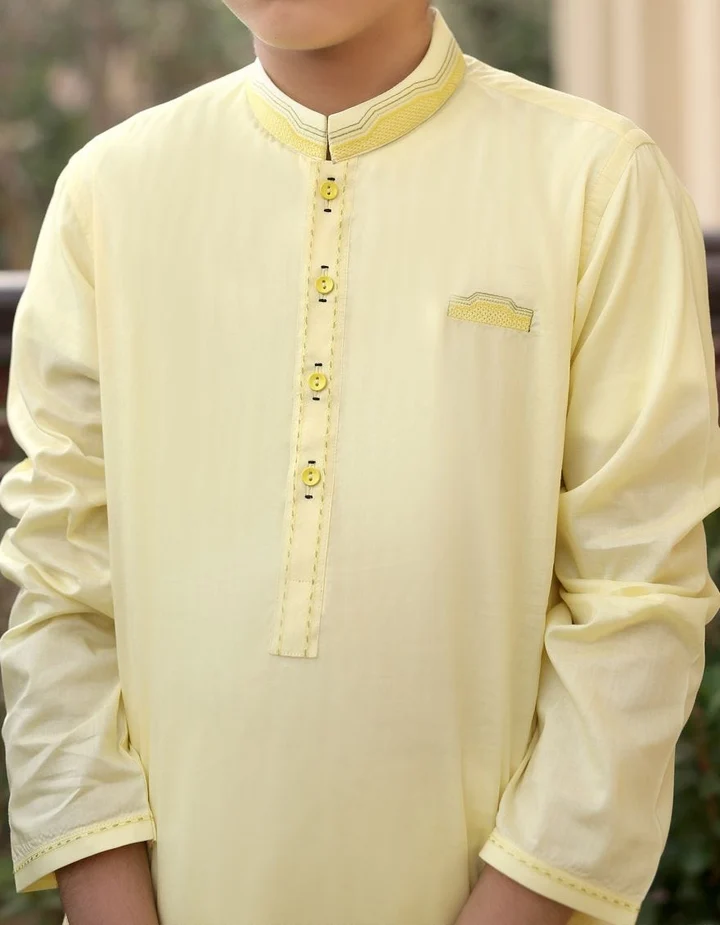
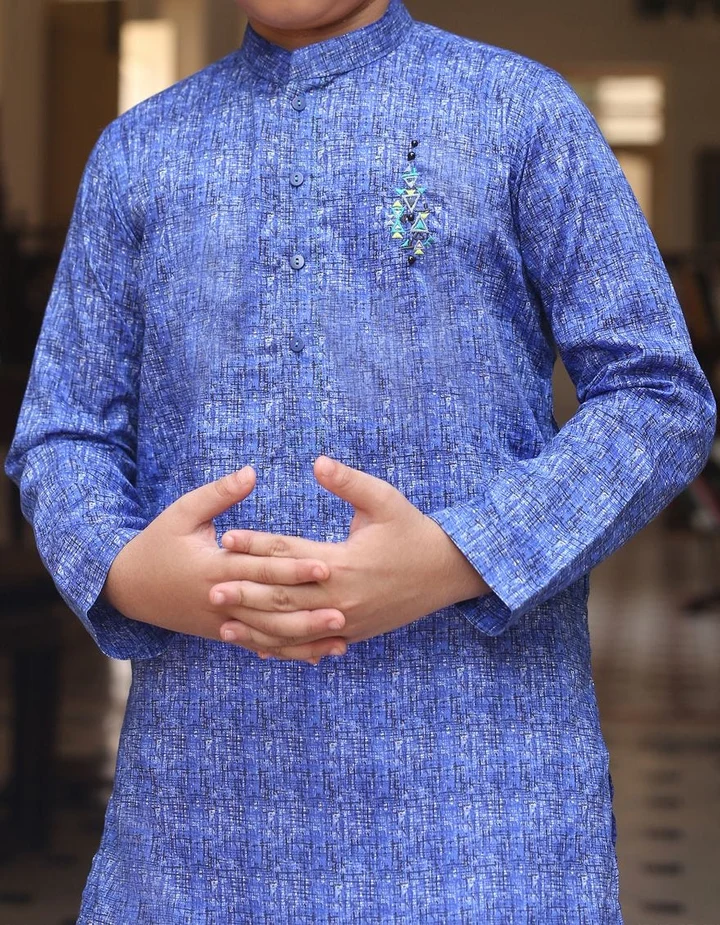
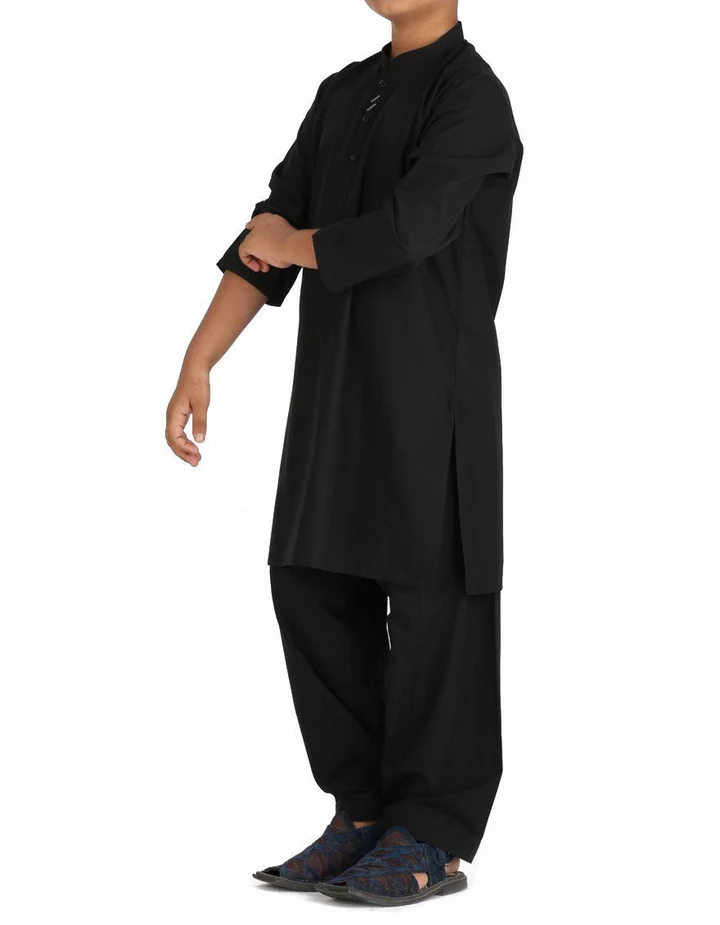
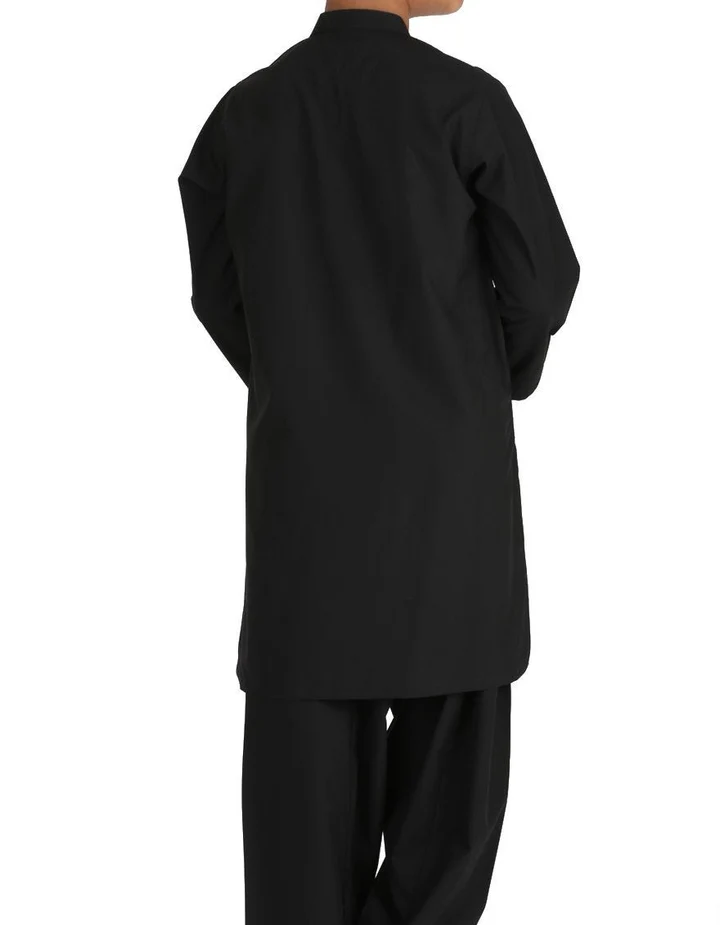
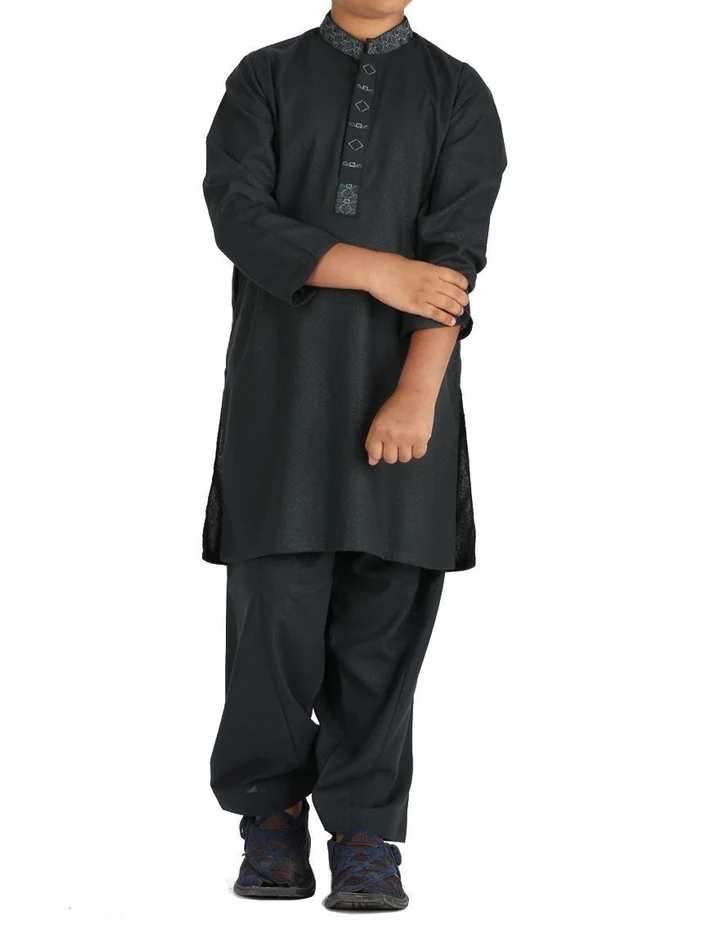
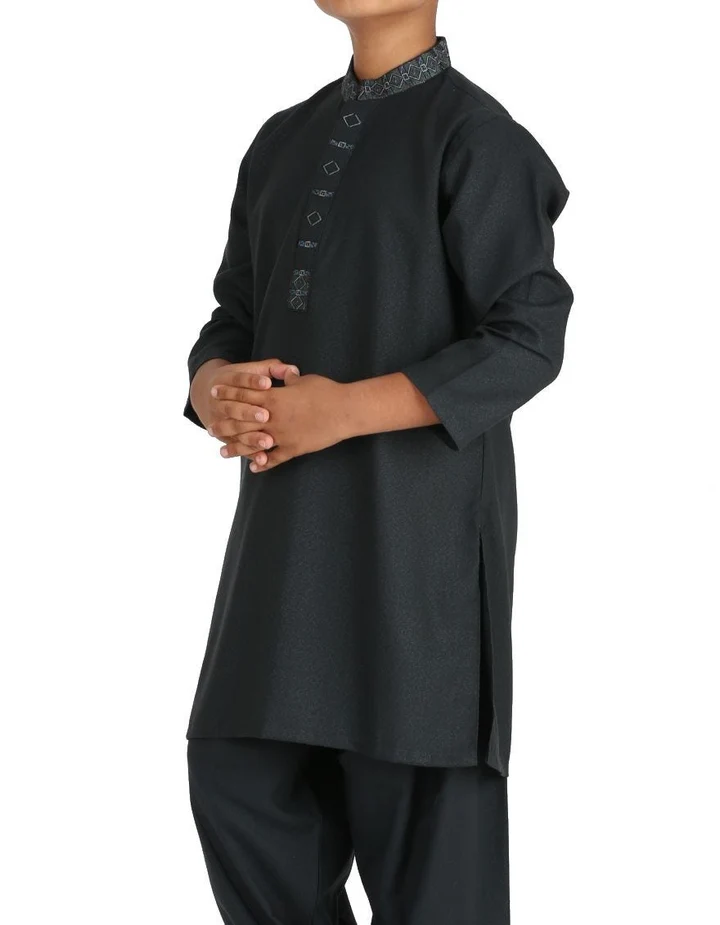
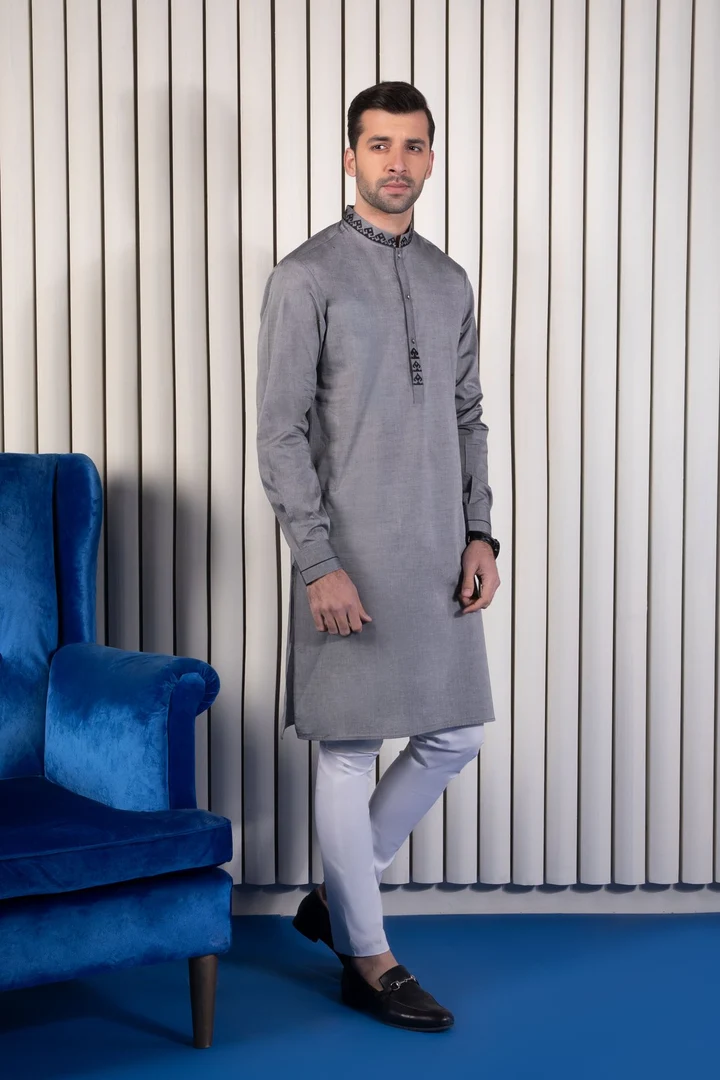
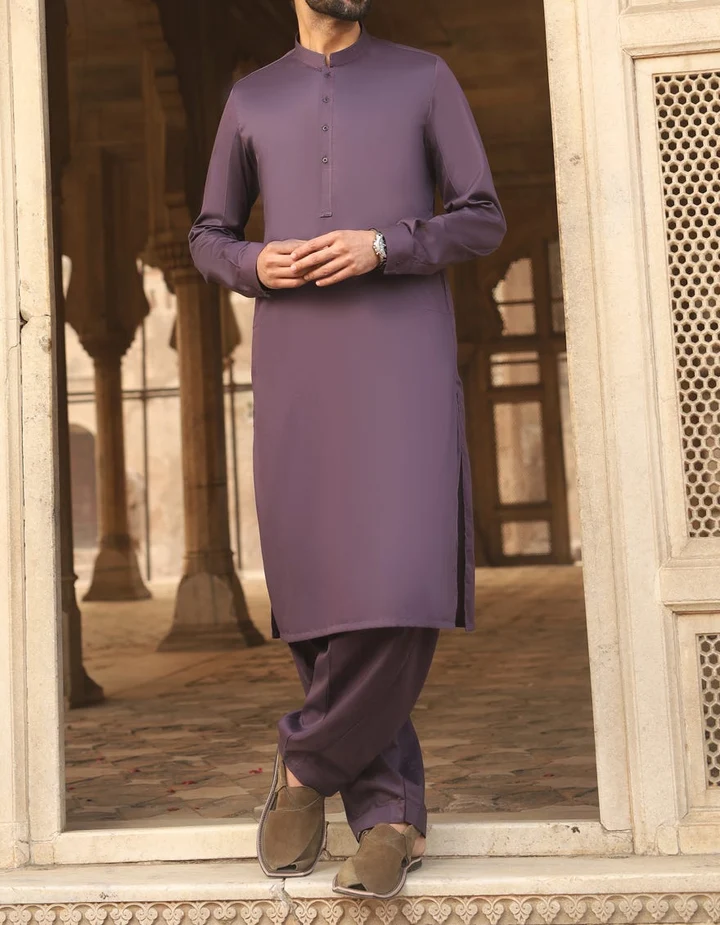
The band collar, sometimes called a mandarin or Nehru collar, has a clean, upright neckline with no fold-over. It looks sharper and slightly more modern, and it is the preferred cut for younger customers and wedding guests. Our band collar suits come in plain and embroidered versions, with embroidery usually kept to the collar, placket or cuffs so the garment stays wearable rather than ornate.Embroidered and festive sets
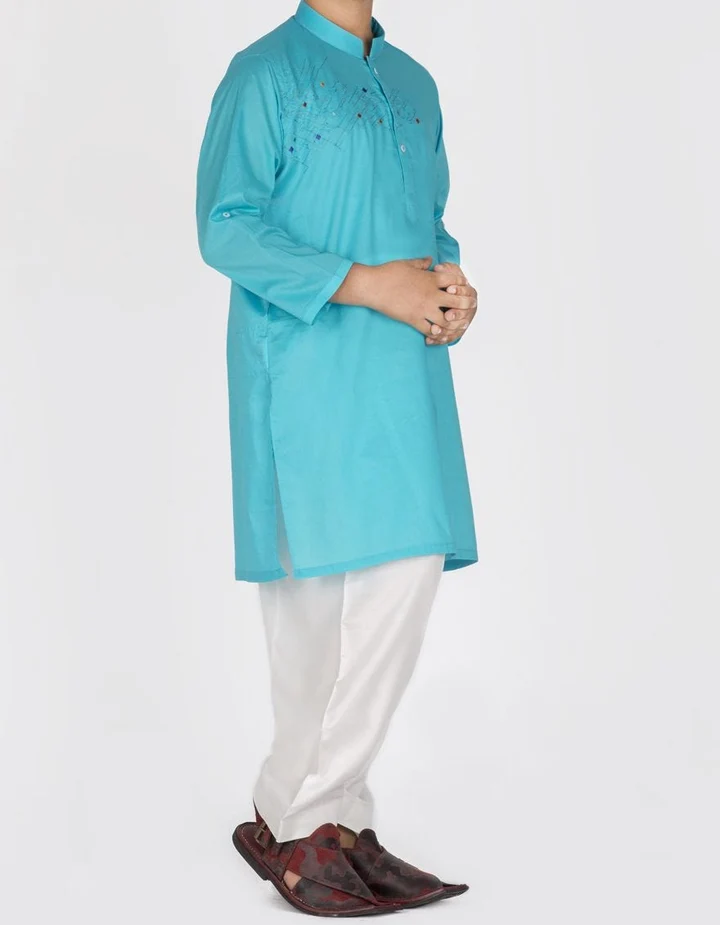
Eid and wedding season drive demand for suits with tonal or contrast embroidery. Designs in this group tend to carry higher margins, but they need more careful stocking because colour and detail preferences vary between communities and regions. Teal, peacock blue, maroon and off-white appear often in our festive range. If you are unsure, start with a small mix and watch what customers pick up.Kurta-only pieces
Not every customer needs a full set. Kurtas sold on their own suit people who wear them over jeans or with trousers they already own, and they sit at a friendlier price point, which makes them a good add-on at the till. They are also useful for shops that want to test the category before committing to complete suits.Everyday plain suits
Plain suits in soft neutrals and mid-tones are the quiet workhorses of a menswear range. They are bought for daily wear, replaced regularly and rarely need discounting, which makes them a stable source of repeat sales. A shop that stocks only festive pieces will have a busy month and a quiet year. A shop with a solid everyday line has customers coming back in March.Fabrics and the seasons
Fabric decides how a garment feels on the first day and how it looks after fifty washes. It also decides when the garment sells. Matching fabric weight to the season is one of the simplest ways to avoid dead stock.Cotton
Pure cotton is breathable, soft and comfortable in warm weather, which is why it dominates summer ranges and any Eid that falls in warmer months. It creases more easily than blends, so it suits customers who value feel over a no-iron finish. Tell them so at the point of sale and there will be no surprises.Wash and wear
Wash and wear, usually a polyester and cotton blend, is the practical choice. It resists creasing, dries quickly and holds its colour, so it is popular with customers who wear shalwar kameez several days a week or travel often. It is also forgiving in the shop: it hangs well and looks fresh without steaming.Boski
Boski has a silky, slightly lustrous finish and a smooth drape, and it is closely associated with formal and special-occasion wear. It carries a premium feel, so it sits above everyday fabrics in price. A handful of boski pieces in cream, sand and white is worth having for weddings and Eid, where customers are happy to pay more for something that looks and feels special.Khaddar and winter weights
As temperatures fall, customers look for heavier weaves. Khaddar is a textured, warmer cloth that suits the British winter and pairs naturally with a waistcoat or jacket. Ordering winter weights early, before the first cold snap, usually pays off, because customers shop for warmth the moment the weather turns.Care and shrinkage
Fabrics behave differently in the wash, and an unhappy customer is rarely unhappy about the garment itself. They are unhappy about the surprise. We recommend telling customers whether a piece is cotton, a blend or boski and how to look after it. A simple care label, or a small card on the rail, reduces returns and builds trust.Sizing and fit
Poor fit is the most common reason menswear comes back, so it is worth getting right before your first order. Our suits are cut in a standard range from small through to extra large, with larger sizes available on request for many designs [confirm size range]. Each catalogue entry lists chest, shoulder, sleeve and kameez length, and we will send a full size chart with any quote. Because kameez length and trouser rise can differ between South Asian and UK conventions, compare our measurements with a garment you already know fits your customers, rather than relying on the size label alone. Classic and band collar suits are cut with a comfortable, traditional fit. If your customers prefer a closer silhouette, ask about slim-cut options, which are increasingly requested by younger buyers. The shalwar is usually finished with a drawstring or elastic waist, so it forgives small differences in waist size. When it comes to splitting an order across sizes, your own sales history is the best guide. As a starting point, many shops find most demand sits in medium, large and extra large, with smaller volumes at either end. A first order of twelve pieces in one design might be split one small, three medium, four large, three extra large and one double extra large, then adjusted once you see what sells. Areas with a younger customer base often skew smaller, while shops serving older customers may need more at the top of the range. Finally, put a size chart where customers can see it, on the rail or beside the product on your website. It takes a minute to set up and noticeably cuts returns.Quality: what we check before anything ships
A garment can look excellent on a hanger and still disappoint after a few weeks. Our checks are designed around the problems customers actually complain about. Before cutting, fabric is inspected for flaws, uneven dyeing and weak weaving. Colour is compared against the approved sample so that a batch of teal does not turn up a shade darker than the last. During stitching, supervisors look at seam strength, collar symmetry, button placement, buttonhole finish and the alignment of pockets and plackets. On embroidered pieces, we check that threads are secure and that the pattern sits evenly on both sides of the placket. After stitching, each garment is trimmed, pressed and checked again for loose threads, marks and measurement accuracy before it is folded and packed. Orders are counted against your purchase order so that quantities and sizes match what you asked for. You do not have to take our word for any of this. Order a sample, pull gently at the seams, check the buttons, wash it according to the care label and see how the colour and shape hold. A good supplier welcomes that kind of testing. Even with careful checks, occasional faults can happen in any production run. If something arrives that is not as described, our returns and cancellations policy explains how we handle it, and our team will work with you to put it right.Ordering: minimums, pricing and samples
We would rather you know the terms before you spend time on a quote, so here is how ordering works. Minimum order quantities depend on the design and on whether you are ordering ready stock or something customised. For ready designs, our minimum is [X pieces per design or Y pieces per order]. This is deliberately modest, because most shops want to test a style before committing deeply. If you are a new retailer, a mixed first order across several designs is a sensible way to learn what your customers respond to. Pricing is tiered. The more you order, the lower the price per piece, and the catalogue shows the price breaks [add your actual tiers, for example 12 to 49 pieces, 50 to 199 pieces and 200 or more]. Prices are quoted in [currency], and we will confirm whether they include packing and shipping. Ask for a landed cost estimate so you can see what each piece costs by the time it reaches your shop, since that is the number your margin actually depends on. Samples are available for most designs [confirm sample policy and cost]. Ordering one or two before a larger commitment is good practice, and we encourage it, particularly if you are buying from us for the first time or trying a new fabric. The process itself is short:- Request the catalogue and price list.
- Choose your designs, colours and size split.
- We send a written quote with quantities, prices, lead time and delivery terms.
- You approve the quote and pay the deposit [confirm payment terms].
- We produce or pull stock, check, pack and ship, then send you tracking details.